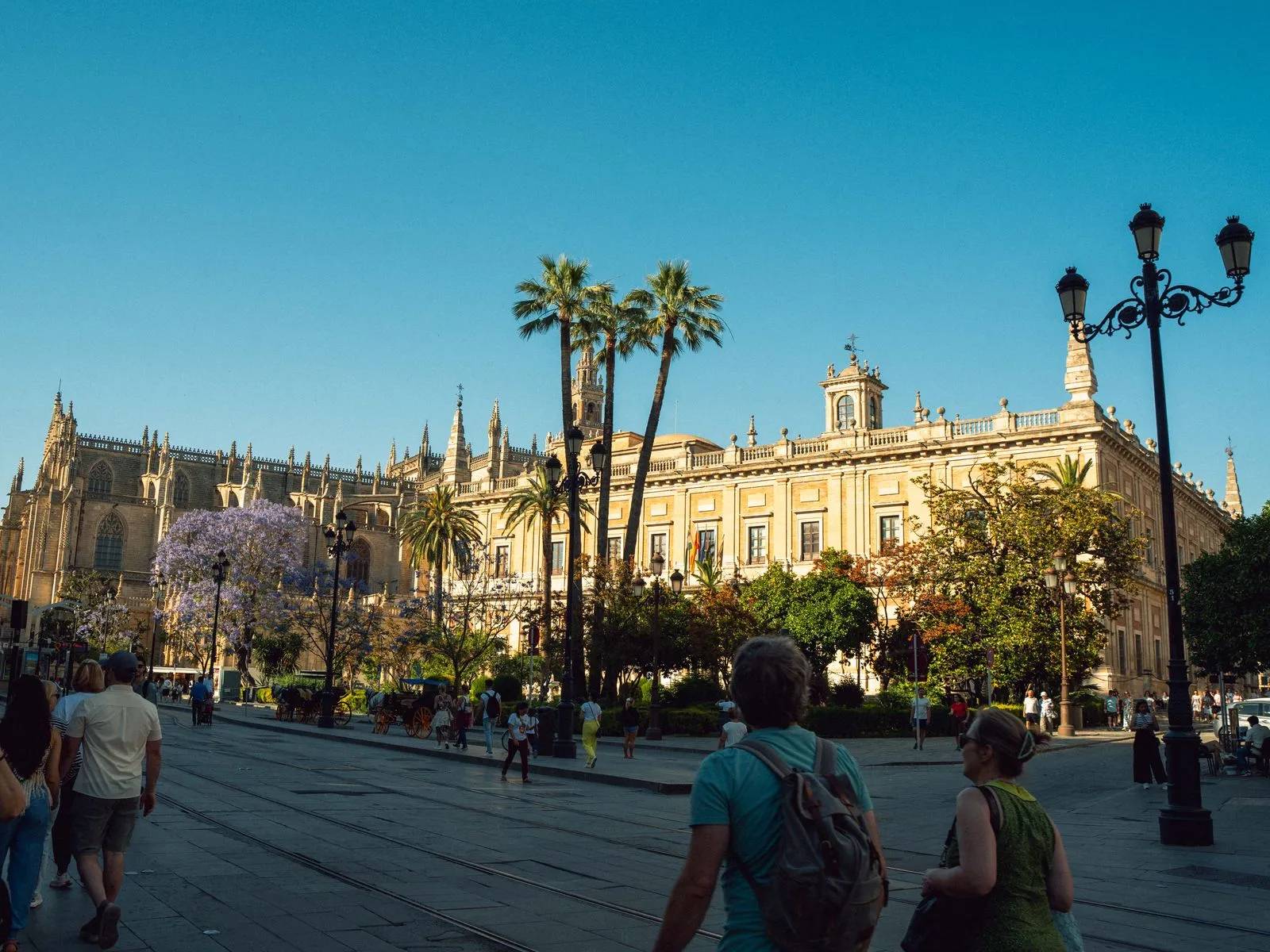
The top 10 must-see places to visit in Seville are the Cathedral, the Giralda, Plaza de España, the Torre del Oro, the Real Alcázar, María Luisa Park, the Museum of Fine Arts, the Santa Cruz quarter, Plaza Nueva with the City Hall, and Triana. Six of them are free, none is more than 30 minutes' walk from the others, and you can see them all in two days. For each one you'll find opening hours and prices as of October 2026, the walking time from our front door and the best time of day to go.
Introduction: why this list
At New Samay Hostel we have been welcoming travellers since 2007 on Avenida de Menéndez Pelayo, right next to the Murillo Gardens, where the Santa Cruz quarter begins. Every day someone at reception asks the same question: "If I only have two days, what can't I miss?". This list is our answer. It is short on purpose, because the rest you'll find by simply wandering the city on foot. We have checked hours and prices on the official websites, and the walking times are what we clock leaving the hostel at an easy pace.
Top 10 must-see places to visit in Seville
The ten essentials fall into three areas: around the Cathedral (Cathedral, Giralda, Alcázar and Santa Cruz), the monumental south (Plaza de España, María Luisa Park and the Torre del Oro) and the centre-to-river axis (Plaza Nueva, the Museum of Fine Arts and Triana).
- Seville Cathedral
- La Giralda
- Plaza de España
- Torre del Oro
- Real Alcázar
- María Luisa Park
- Museum of Fine Arts
- Barrio de Santa Cruz
- City Hall, Plaza Nueva and Plaza de San Francisco
- Triana
Summary table: walking time, admission and best time
Approximate walking times from New Samay Hostel (Av. de Menéndez Pelayo 13) and standard admission as of October 2026:
| Place | On foot from the hostel | Admission (October 2026) | Best time |
|---|---|---|---|
| Seville Cathedral | about 10 min | €13 online / €14 at the ticket office (includes the Giralda and El Salvador) | At opening or late in the day |
| La Giralda | about 10 min | Included in the Cathedral ticket | At the start of your visit |
| Plaza de España | about 15-20 min | Free | Early morning or late afternoon |
| Torre del Oro | about 15-20 min | Free (voluntary €3 donation) | Combined with the riverside walk |
| Real Alcázar | about 10 min | €15.50 general; €8 reduced | At 9:30, ticket bought in advance |
| María Luisa Park | about 15 min | Free | Morning, or midday for the shade |
| Museum of Fine Arts | about 25-30 min | €1.50; free for EU citizens | Afternoon, Tuesday to Saturday |
| Barrio de Santa Cruz | about 5 min | Free | Early morning and at night |
| Plaza Nueva and City Hall | about 15 min | Squares free; City Hall guided tour by booking | On your way to Triana |
| Triana (Triana Bridge) | about 20-25 min | Free | Market in the morning, Calle Betis at sunset |
1. Seville Cathedral
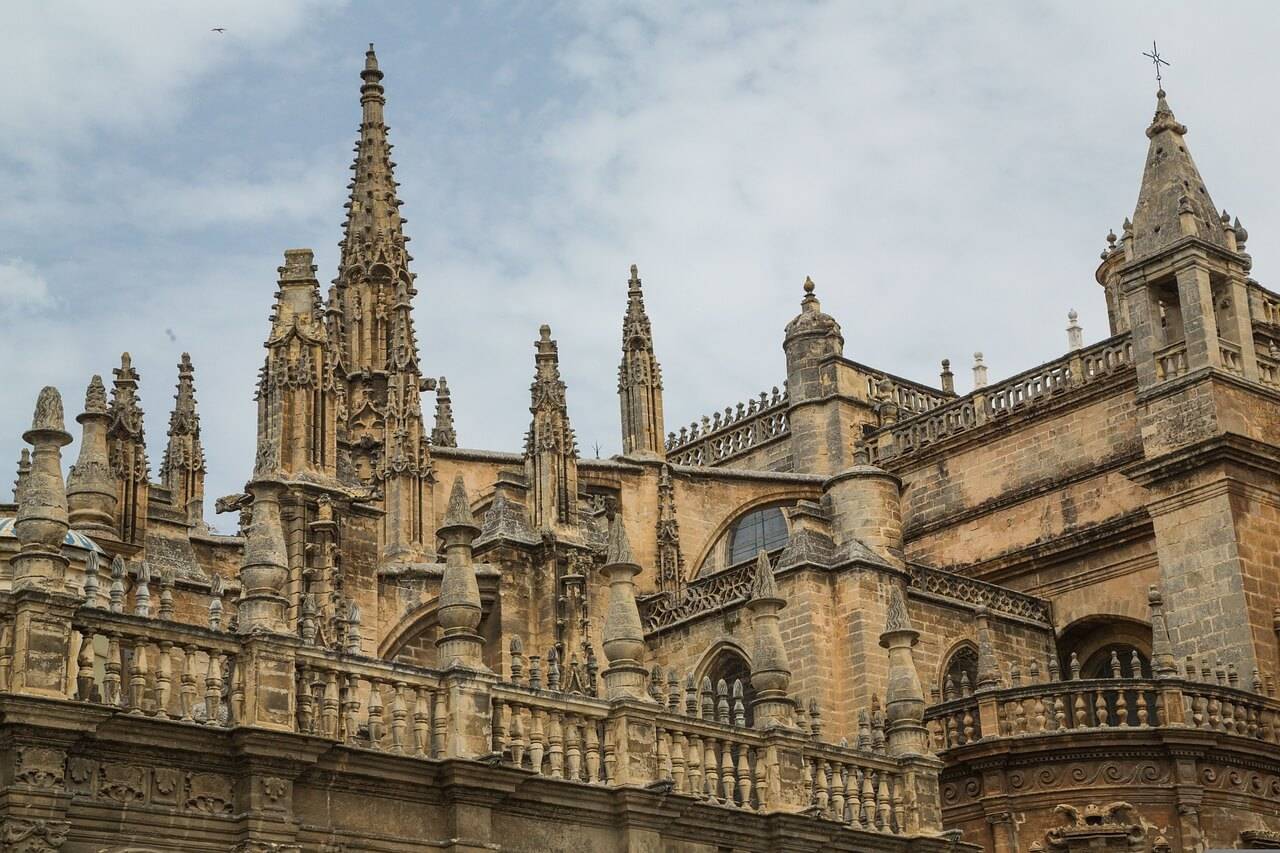
Seville Cathedral is, according to UNESCO, the largest Gothic building in Europe, and the general ticket (€13 online as of October 2026) includes the climb up the Giralda. Work began in 1401 on the site of the Almohad mosque, of which it keeps the minaret and the Courtyard of the Orange Trees.
Inside is the tomb of Christopher Columbus, his coffin carried on the shoulders of four heralds representing the kingdoms of Castile, León, Aragon and Navarre. In front of the high altar, the dance of the Seises is performed by choirboys only on a handful of feast days, such as Corpus Christi and the octave of the Immaculate Conception. Together with the Alcázar and the Archivo de Indias, the Cathedral has been a UNESCO World Heritage Site since 1987.
Practical information (as of October 2026):
- Opening hours: Monday to Saturday 10:45 to 19:00, Sunday 14:30 to 19:00; ticket offices close at 18:00. Services can change the timetable: from 4 to 7 December 2026, because of an international congress of brotherhoods, only the Giralda and an exhibition can be visited, and there is no tourist visit on 8 December.
- Price: €13 online and €14 at the ticket office; reduced €7 / €8 (over-65s, students up to 25); audio guide €5 (€4 as an app). The ticket covers the Cathedral, the Giralda and the Church of El Salvador.
- Free: children up to 13 with an adult, and people born in or living in the diocese of Seville. On Sundays there is also a free public visit, depending on the liturgical calendar: tickets are handed out in person at the Puerta del Príncipe ticket office from 17:00, with limited places.
- Entrance and tickets: with an online ticket you go in through the Puerta del Lagarto; if you buy on the spot, through the Puerta del Príncipe. Official sales at catedraldesevilla.es.
- How long: the Cathedral chapter estimates about 75 minutes. There is no left-luggage service.
2. La Giralda
The Giralda is the former Almohad minaret of the great mosque, turned into the Cathedral's bell tower, and you climb it by ramps, not stairs. We list it separately from the Cathedral because it has dominated Seville's skyline for more than 800 years and deserves a section of its own.
The climb has 34 ramps and 17 steps, according to the Cathedral's official website; the ramps are so wide that people once rode up on horseback. With the Giraldillo on top, the tower reaches 97.52 metres, and from the belfry you can see the Alcázar, Santa Cruz and, in the distance, Triana. Visitors with reduced mobility, pushchairs and medium or large backpacks cannot go up.
The Giraldillo crowning the tower is a bronze statue about four metres tall representing Faith triumphant. It turns with the wind like a weathervane, and that turning (girar in Spanish) gave the tower its name.
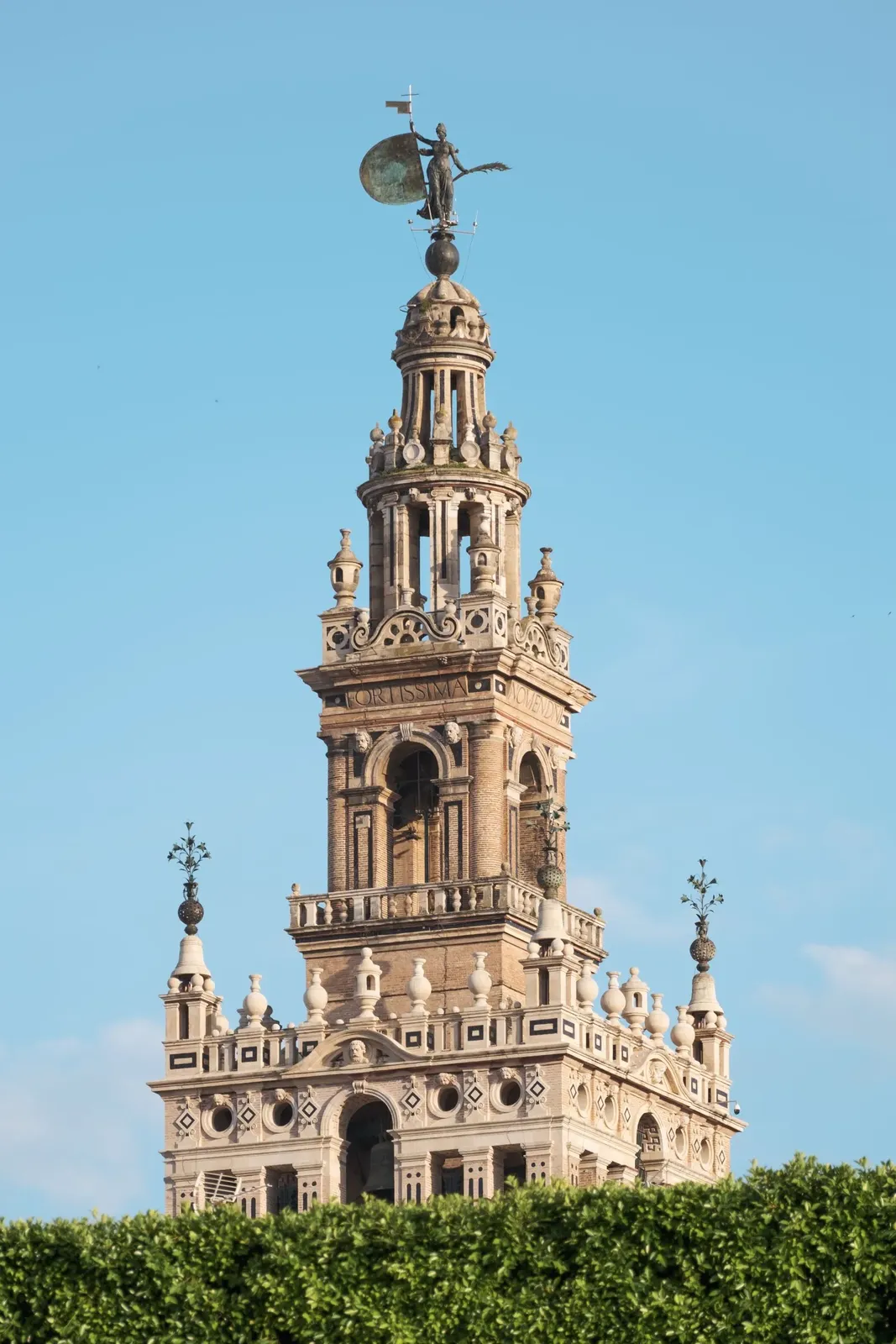
A tip from us: go up at the very start of your visit, before groups build up on the ramps, and take your photo of the tower in the late afternoon from Plaza de la Virgen de los Reyes.
3. Plaza de España
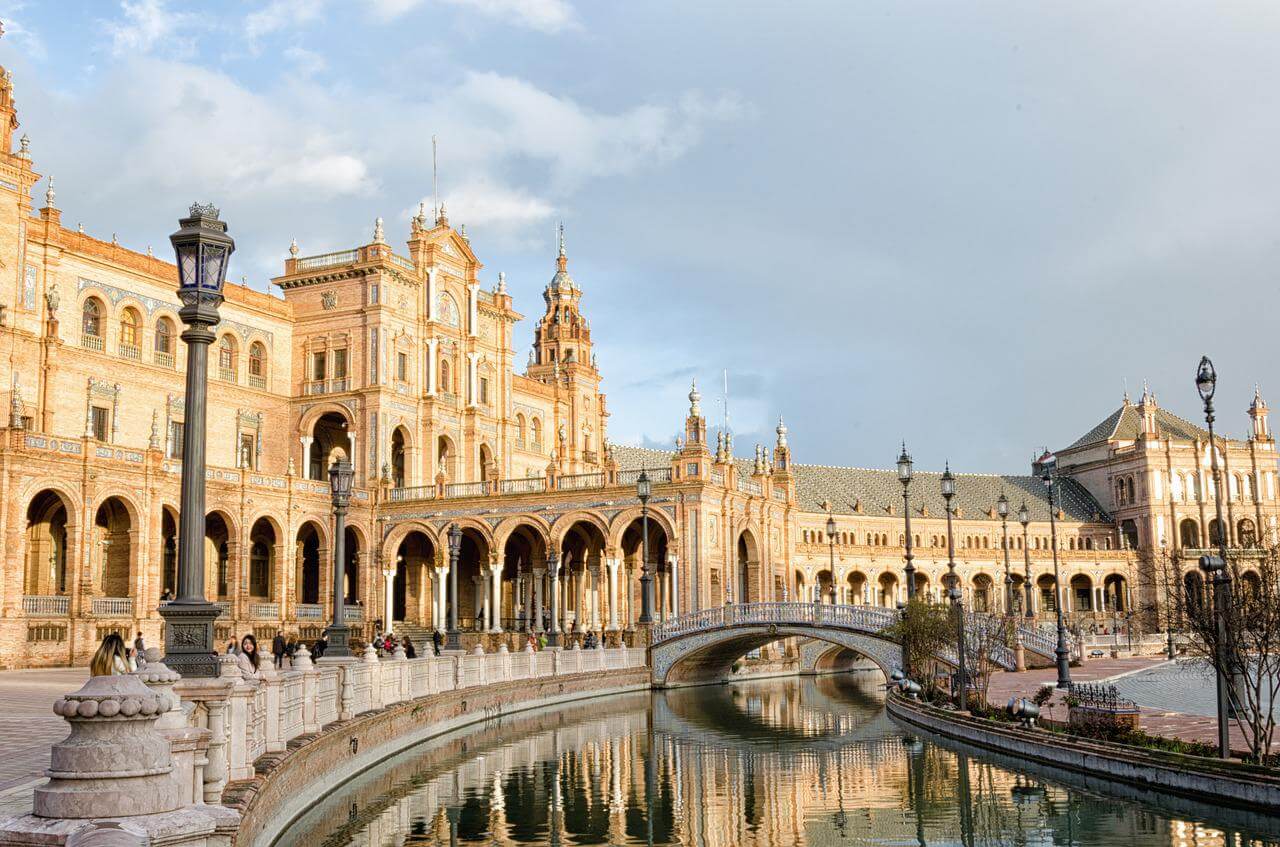
Plaza de España is free and keeps the opening hours of María Luisa Park: 8:00 to 22:00 in winter and until midnight in summer. It is probably the place in Seville that steals the most hearts: when you walk in from one end and the semicircle opens up in front of you, people stop in their tracks.
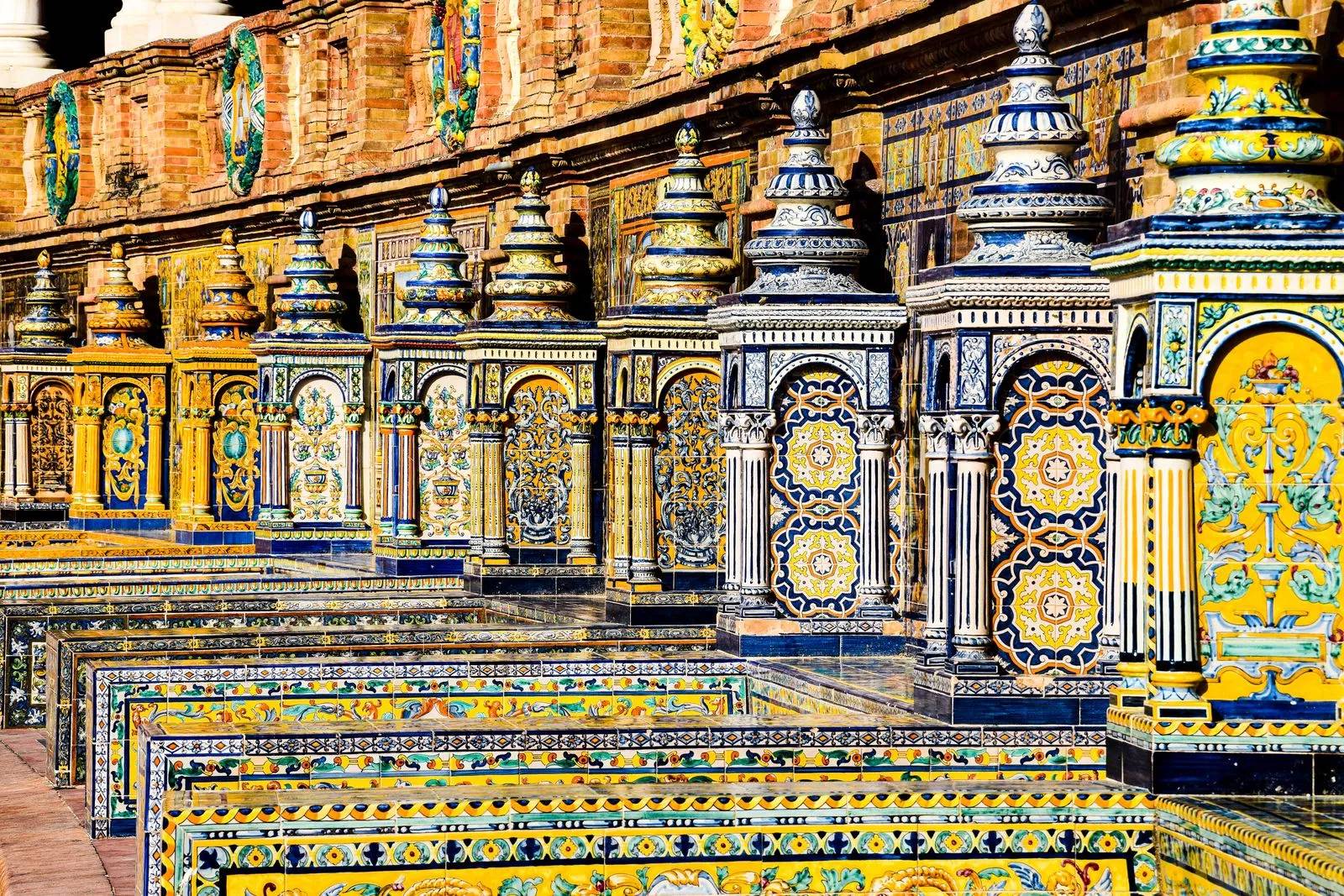
It was designed by Aníbal González for the 1929 Ibero-American Exposition, covers some 50,000 square metres and is ringed by a canal crossed by four bridges. The best-loved detail is the row of tiled benches dedicated to the Spanish provinces, in alphabetical order: finding your favourite one is almost a ritual.
Do you have to pay to get in? No. As of October 2026 entry is still free: the City Council has floated charging tourists, but the bylaw currently going through only regulates events. It is about 15-20 minutes on foot from the hostel, across the Murillo Gardens.
4. Torre del Oro
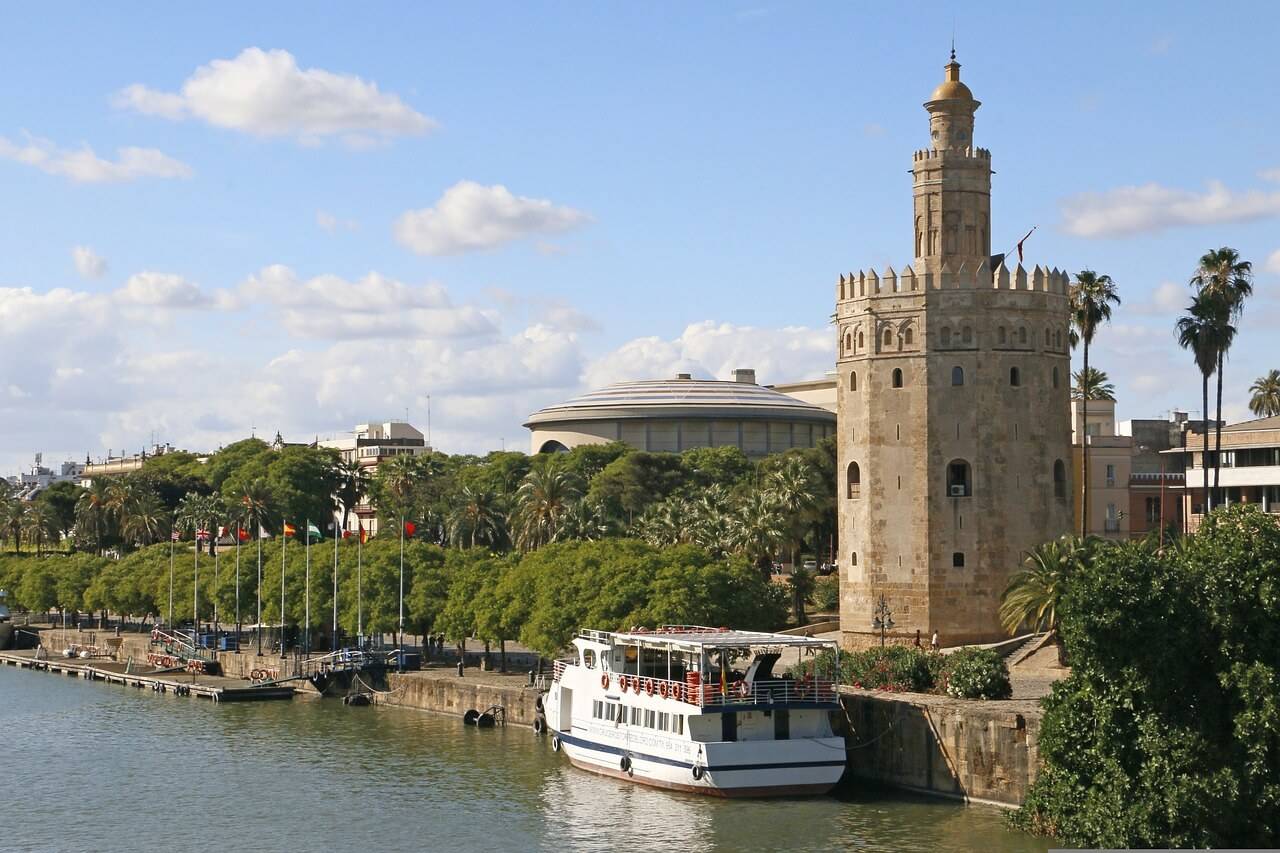
The Torre del Oro is an Almohad defensive tower built around 1220 on the banks of the Guadalquivir, and today it houses the Navy's Torre del Oro Maritime Museum, free to enter with a voluntary €3 donation. It saw the Magellan-Elcano expedition, the first voyage around the world, set sail and return.
It is probably the best-preserved example of Almohad military architecture on the Iberian Peninsula. Governor Abu-l-Ula had it built; it stands 36 metres tall and was once linked by a wall to the Torre de la Plata and the Alcázar. Over the centuries it has been a prison, a chapel, a warehouse and a naval command post. According to Spain's Ministry of Defence, its Arabic name referred to the golden gleam it cast on the river, produced by the mix of lime and straw in its walls; the story about King Peter I keeping his treasure inside is just a legend.
Practical information (as of October 2026): Monday to Friday 9:30 to 19:00, weekends and public holidays 10:30 to 19:00 (last entry 18:30). Closed on 1 and 6 January, Good Friday, 1 May and 24, 25 and 31 December. Free entry with a voluntary €3 donation. It stands on Paseo de Colón, about 15-20 minutes' walk from the hostel, and takes around 30-40 minutes to see.
5. Real Alcázar
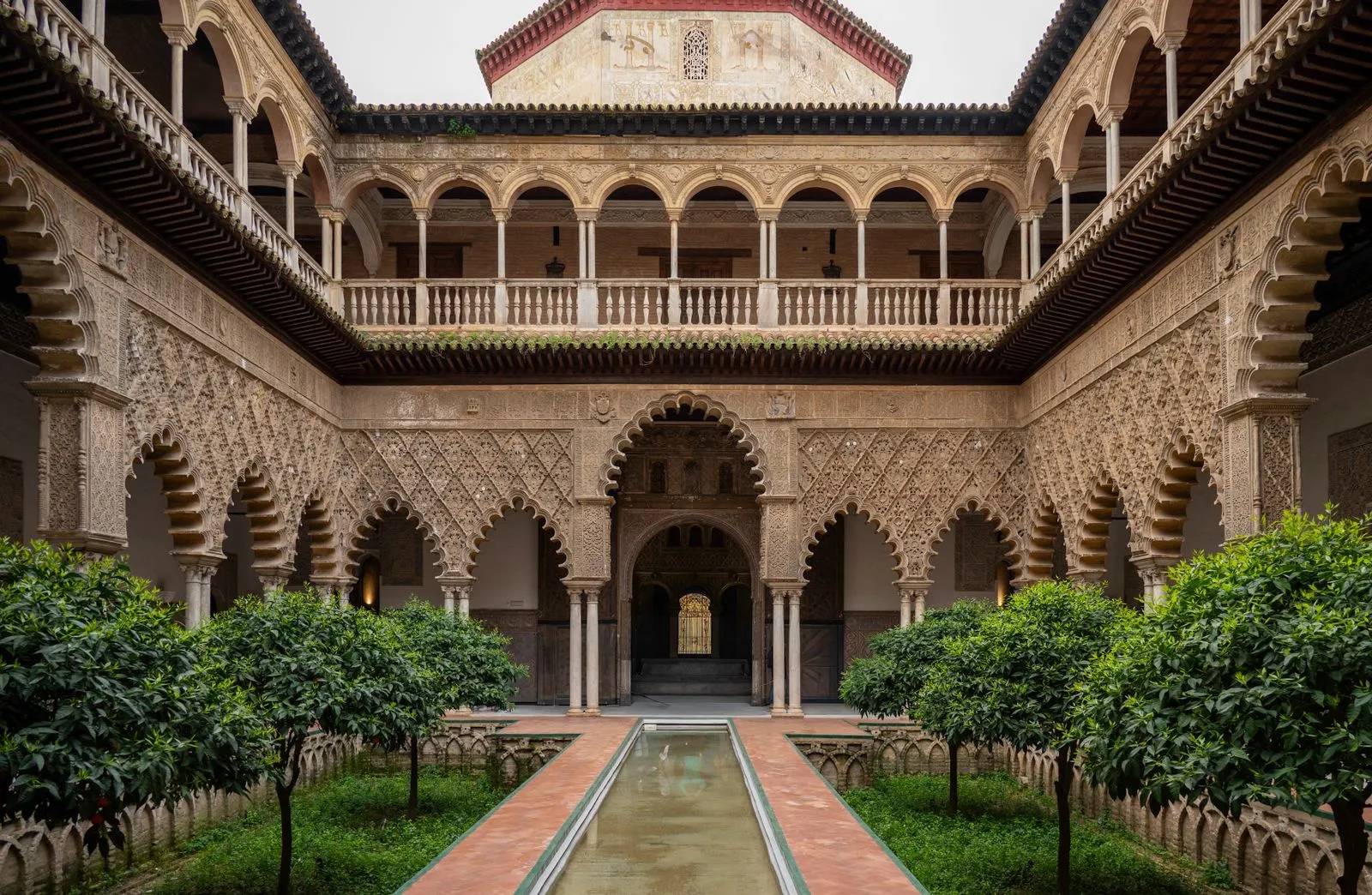
The Real Alcázar of Seville is the oldest royal palace still in use in Europe, and a general ticket costs €15.50 as of October 2026. It is about 10 minutes on foot from the hostel, and its walls tell the story of every culture that passed through the city: from the Almohad palace to Peter I's Mudéjar palace and the Renaissance additions.
Don't miss the Patio de las Doncellas, with its long pool and tiled dados, the Hall of Ambassadors, with its golden dome, and the Patio de las Muñecas. Allow at least an hour for the gardens, which are a blessing in summer.
Practical information (as of October 2026):
- Opening hours: 1 October to 31 March, 9:30 to 17:00; 1 April to 30 September, 9:30 to 19:00. Closed on 1 and 6 January, Good Friday and 25 December.
- Price: general €15.50; reduced €8 (over-65s and students aged 14 to 30, of any nationality); the Cuarto Real Alto, the rooms used by the Royal Family, is a separate visit at €5.50. Free for children up to 13 and for people born in or living in the city of Seville, who still need a ticket.
- Tickets: buy online through the official Real Alcázar website or at the Patio de Banderas ticket office (cards only). In spring, book several days ahead.
- How long: two to three hours including the gardens.
6. María Luisa Park
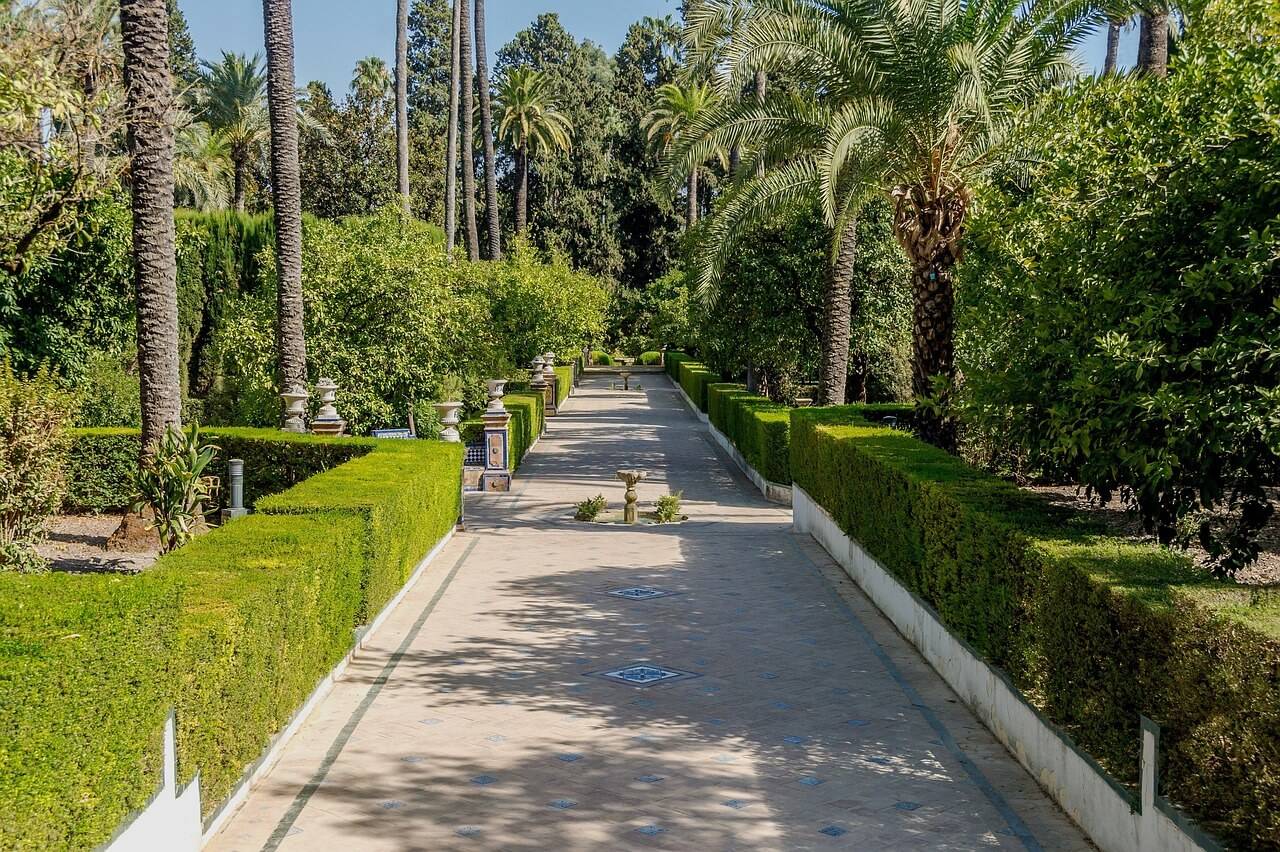
María Luisa Park is Seville's great historic park, free to enter, open from 8:00 to 22:00 in winter and until 24:00 in summer. You'll probably pass through it more than once, because Plaza de España sits inside it.
It covers some 340,000 square metres and was laid out by the French landscape architect Forestier: the Lotus and Duck ponds, the Lions' fountain, Mount Gurugú and little shaded corners dedicated to writers. At the far end, Plaza de América is home to the Archaeological Museum and the Museum of Popular Arts and Customs; we explain what to see in both in our pick of the best museums in Seville.
From the hostel you reach the first gardens in about 15 minutes. In summer it is the best patch of shade in the centre, and a sandwich on one of its benches is a great plan if you're travelling on a tight budget.
7. Museum of Fine Arts
Seville's Museum of Fine Arts is the great gallery of Sevillian Baroque painting, and admission is free for European Union citizens (€1.50 for everyone else). It brings together works by Murillo, Zurbarán and Valdés Leal in the former Convent of La Merced, whose courtyards alone are worth the visit, and the old convent church holds Murillo's large canvases. If you enjoy it, our guide to the best museums in Seville has more ideas.
Practical information (as of October 2026):
- Opening hours (September to July): Tuesday to Saturday 9:00 to 21:00; Sundays and public holidays 9:00 to 15:00; closed on Mondays, except the day before a public holiday. In August, Tuesday to Sunday 9:00 to 15:00. The last tickets are sold 45 minutes before closing.
- Price: €1.50. Free for EU citizens showing an ID card or passport, and for everyone on 28 February, 18 May, 27 September and 4 December.
- Where: Plaza del Museo 9, about 25-30 minutes' walk from the hostel. Backpacks larger than 20 x 30 x 10 cm are not allowed inside, but there are lockers.
8. Barrio de Santa Cruz
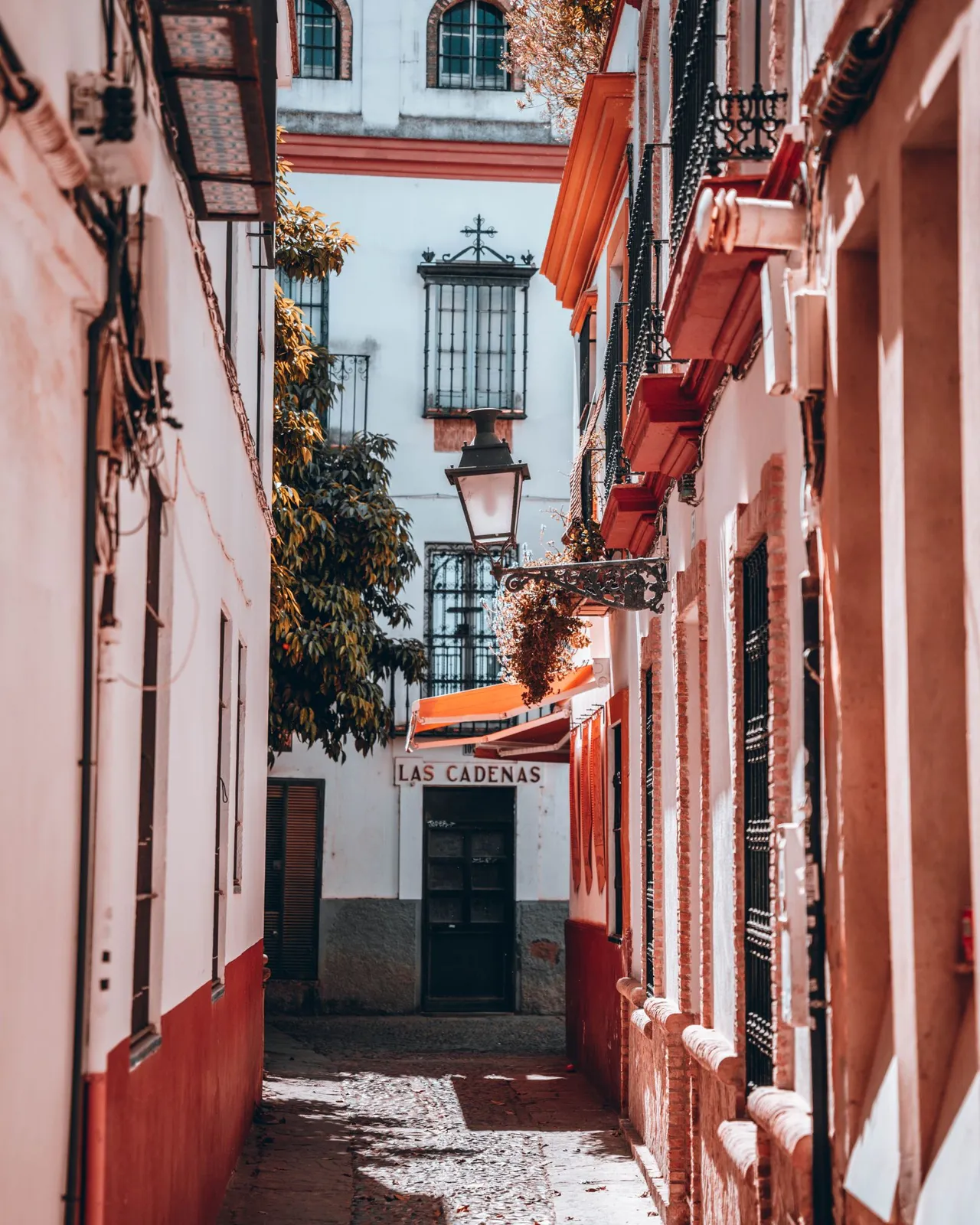
The Santa Cruz quarter is Seville's old Jewish quarter, a maze of alleys and little squares next to the Cathedral and the Alcázar that you can explore for free on foot. We recommend seeing it twice: early in the morning, before the tour groups arrive, and at night, when the street lamps come on.
Look out for Plaza de Santa Cruz, Plaza de Doña Elvira, the Callejón del Agua running along the Alcázar wall, Calle Vida and Plaza de los Venerables, or just get lost without a map. That is the best way to get to know it.
For us it's our home neighbourhood: the hostel stands where Santa Cruz begins, and Plaza de Santa Cruz is about 5 minutes away on foot. Many of our guests take their first stroll here on the very evening they arrive.
9. City Hall, Plaza Nueva and Plaza de San Francisco
Plaza Nueva and Plaza de San Francisco surround the Casa Consistorial, the Renaissance seat of Seville City Hall, and strolling through them costs nothing. Plaza Nueva, the city centre's great open-air living room, faces the 19th-century façade; the 16th-century Plateresque façade, with its carved decoration, looks onto Plaza de San Francisco. From here run Calle Tetuán and Calle Sierpes, the main shopping streets, and Avenida de la Constitución, where the tram heads towards the Cathedral.
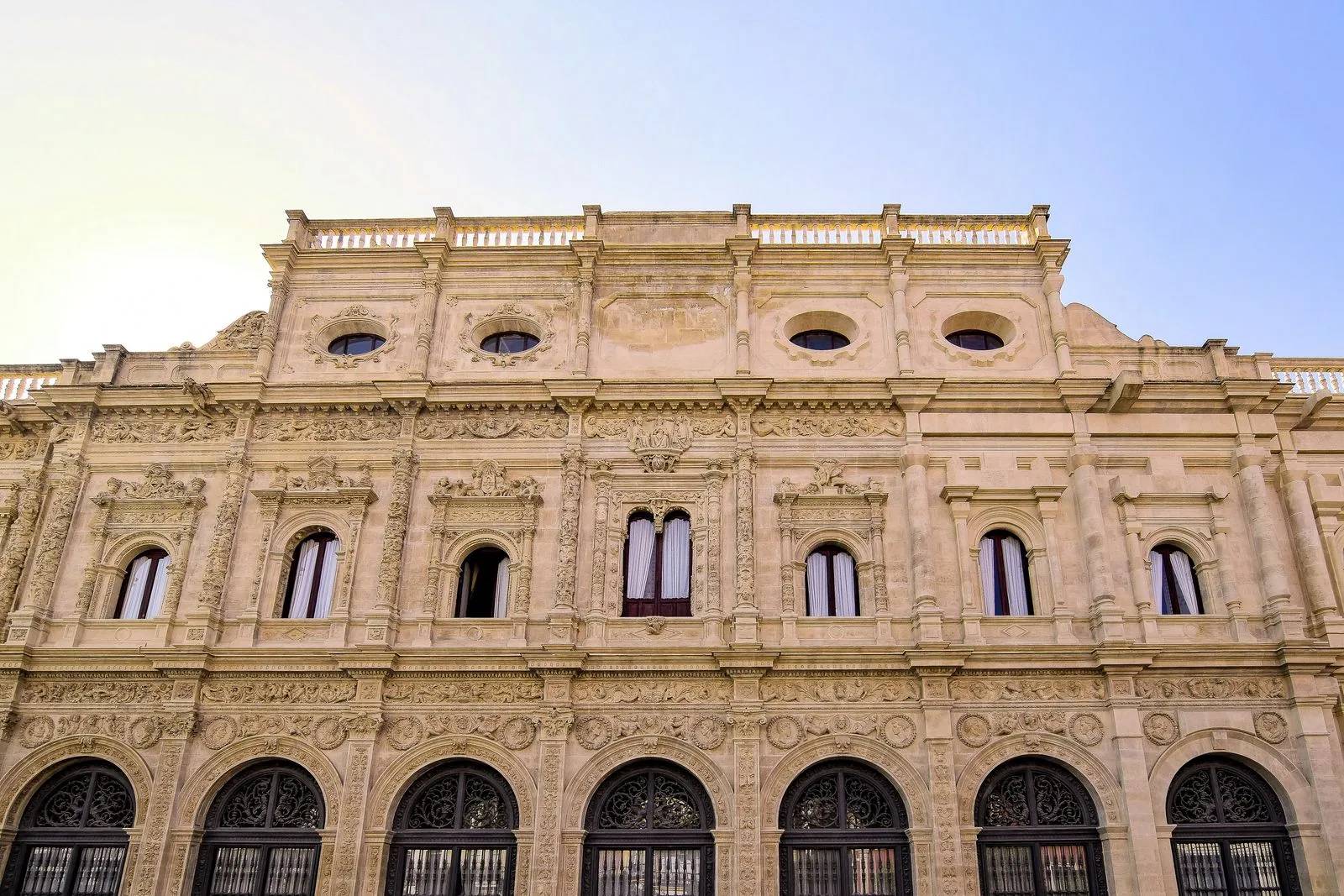
Can you visit the inside? Yes, on a guided tour booked in advance, but the council page that listed days and prices is no longer online and, as of October 2026, we have not been able to confirm them. Check the City Council website or call 010 before you go. Plaza Nueva is about 15 minutes on foot from the hostel.
10. Triana
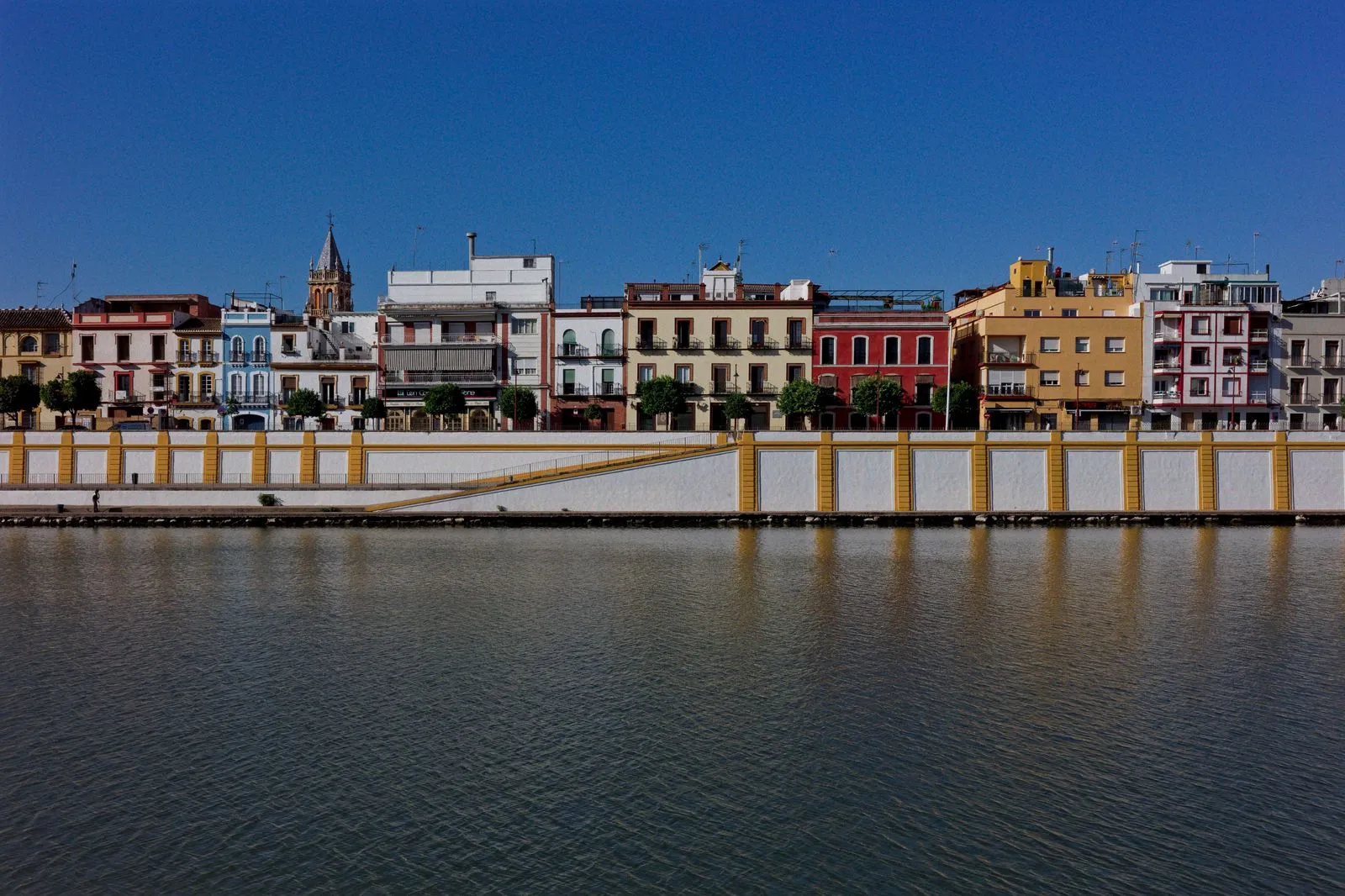
Triana is the neighbourhood across the Guadalquivir; you reach it by walking over the Triana Bridge, and exploring it is free. Seafaring, pottery-making and flamenco to the core, it has produced bullfighters and artists, and it's one of the places that give Seville its colour.
Right after the bridge you'll find the Triana Market, built over the remains of San Jorge Castle, the former seat of the Inquisition and now an interpretation centre. From there, Calle San Jacinto, Calle Pureza with the Capilla de los Marineros, and the Alfarería area with its ceramics shops are the heart of the neighbourhood.
Calle Betis, overlooking the river, is the place to watch the sun go down over the Torre del Oro. Another plan we really recommend is a boat trip on the Guadalquivir. From the hostel, the Triana Bridge is about 20-25 minutes on foot.
Two-day walking route: the order we recommend
This is the route we draw on the map at reception when someone wants to see everything without taking a bus: it starts and ends at the hostel, makes the most of the cooler hours and never crosses the city twice. If you can stay longer, our day trips from Seville are a perfect third day.
Day 1: the historic heart (about 4 km)
- 9:15, from the hostel to the Alcázar through the Murillo Gardens and the Callejón del Agua (about 10 minutes).
- 9:30-12:00, Real Alcázar: palaces first, gardens afterwards.
- 12:15, Santa Cruz quarter and lunch with tapas in the neighbourhood.
- 15:00-16:45, Cathedral and Giralda, with an online ticket for a fixed time slot.
- 17:00, Plaza Nueva, the City Hall and Calle Sierpes (about 5 minutes from the Cathedral).
- Sunset at the Setas (about 10 minutes from Plaza Nueva).
Day 2: park, river and Triana (about 6 km)
- 9:00, Plaza de España in soft light and without the crowds (about 15-20 minutes from the hostel).
- 10:00, María Luisa Park as far as Plaza de América.
- 11:30, Torre del Oro, walking down Paseo de las Delicias (about 15 minutes).
- 12:30, Paseo de Colón along the river, with the Maestranza bullring opposite, as far as the Triana Bridge.
- 13:00, Triana Market and lunch in the neighbourhood.
- Afternoon, Museum of Fine Arts (open until 21:00 Tuesday to Saturday), about 15 minutes from Triana.
- Sunset on Calle Betis and back along the river.
When to visit Seville and what time to go to each place
The best seasons are spring (March to May) and autumn (October and November): pleasant temperatures and lovely light. April is beautiful, but during Holy Week and the April Fair the centre fills up and some opening hours change. In July and August the midday heat is fierce: get up early, save the Cathedral or the Museum of Fine Arts for the middle of the day and go walking in the evening. In winter the queues are shorter.
The rule of thumb is simple: ticketed monuments first thing, squares and parks early or late, and neighbourhoods at dusk, when Seville heads out into the streets.
Common mistakes we see every week
- Turning up at the Alcázar without a ticket in high season: the ticket-office queue can eat up your whole morning.
- Going to the Cathedral with your suitcase: there is no left-luggage service and you can't climb the Giralda with a large backpack.
- Trying to see all ten in one day: it's possible, but you won't enjoy it. Two days is about right.
- Forgetting that the Museum of Fine Arts is closed on Mondays and only opens in the morning on Sundays.
- Buying from resale websites: use the official websites linked here, with no mark-up.
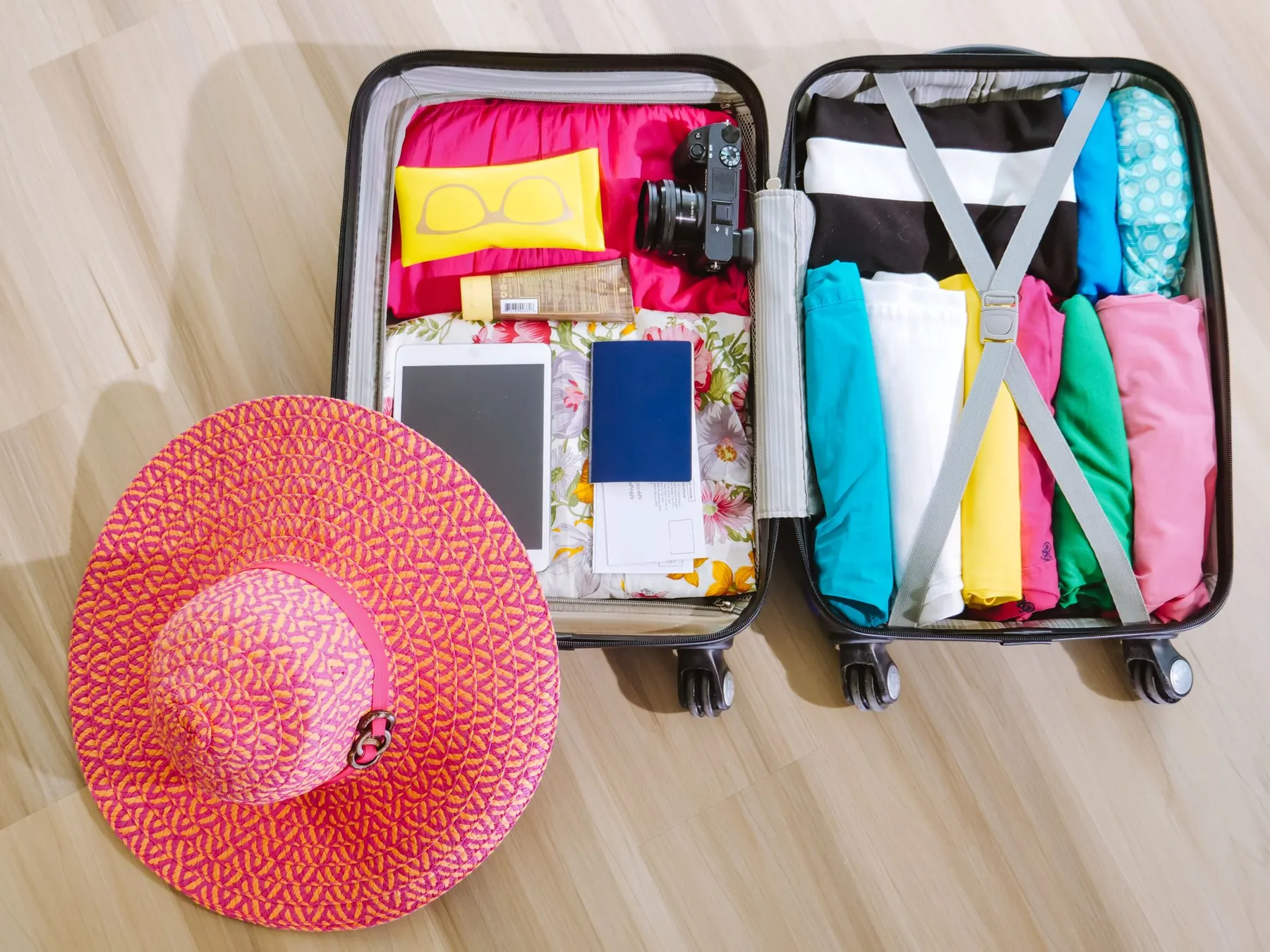
- Heading out without water or a hat between May and September: the full checklist is in our guide on what to pack for your trip to Seville.
Beyond the list
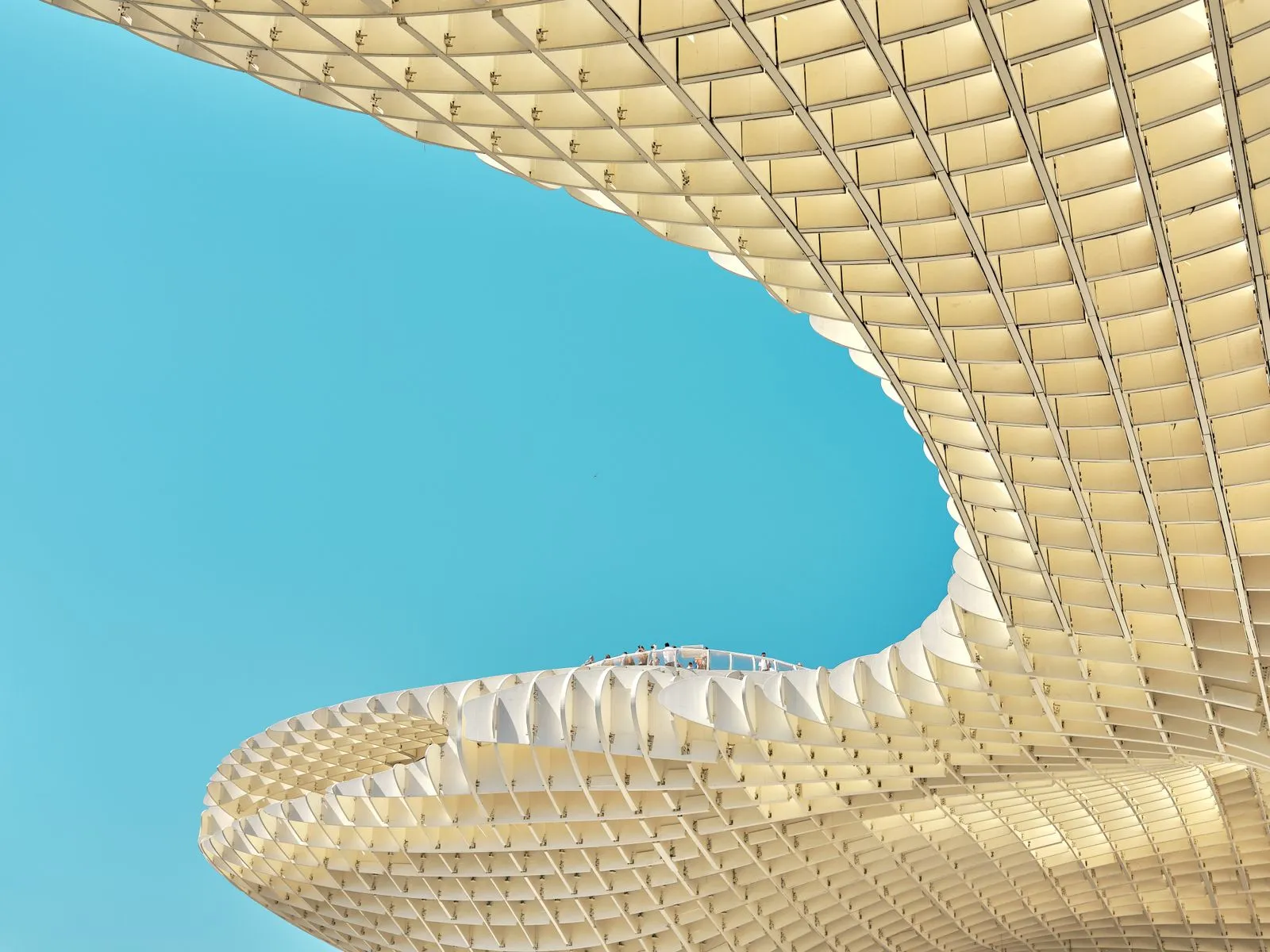
There is much more to Seville than this top 10. The Setas de Sevilla (Metropol Parasol), the huge wooden canopy on Plaza de la Encarnación, has a walkway viewpoint open from 9:30 to 1:00 (last entry at 00:15), with tickets from €16 as of October 2026 according to its official website. It is about 20 minutes' walk from the hostel.
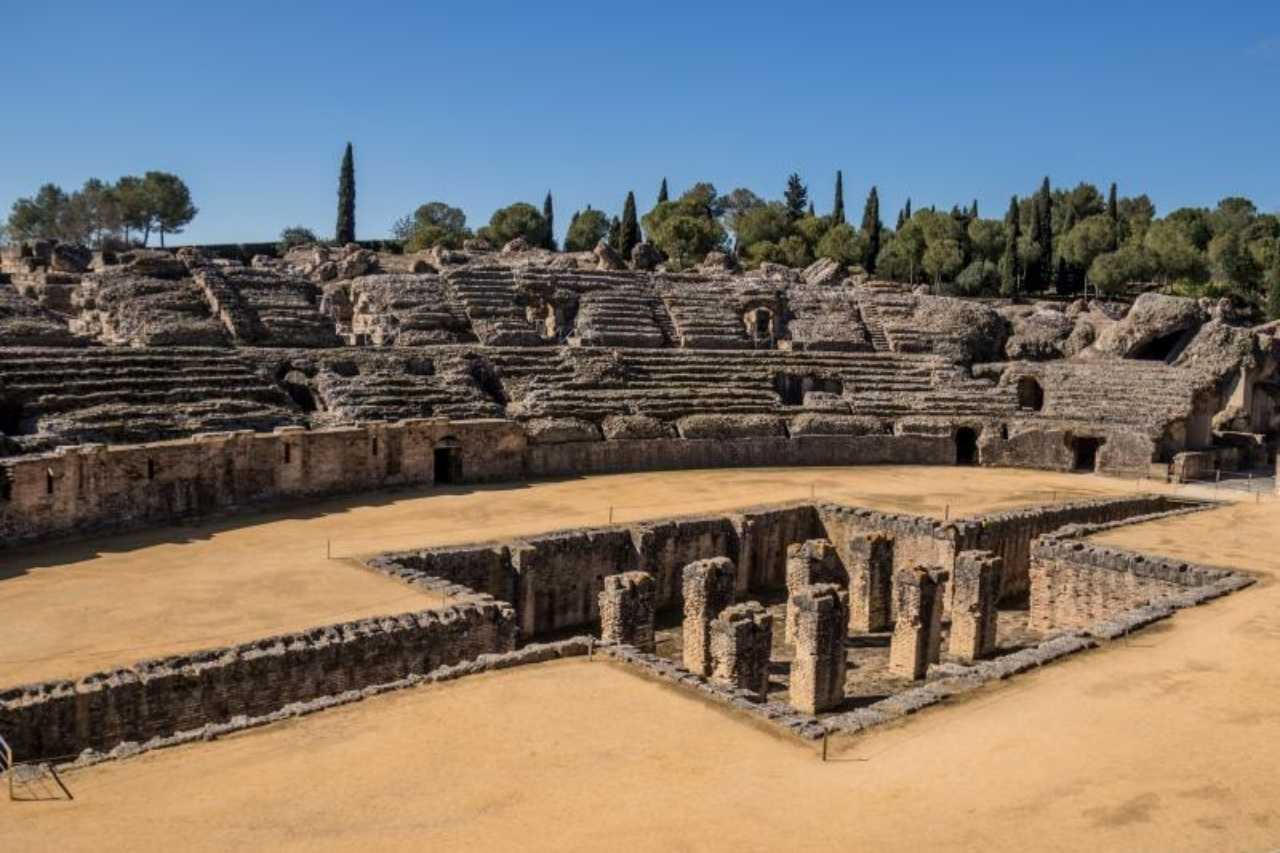
Very close to us there are two palaces that surprise everyone who visits: the Casa de Pilatos, about 10-12 minutes away on foot, with its tiled courtyards, and the Palacio de las Dueñas, the home of the Dukes of Alba, about 20 minutes away. If you have a spare day, Itálica, Carmona and Córdoba are all in our article on day trips from Seville, and you'll find more ideas on our blog. If you have any questions before you arrive, just get in touch with us.
If you'd like to experience Seville from right in the centre, at New Samay Hostel we have private rooms and shared rooms with bathrooms, a 24-hour reception, a fully equipped kitchen, a rooftop terrace and free luggage storage, which is very handy on the day you arrive or leave. We've been here since 2007 (you can read our story) and we love helping you plot your route on the map. Travel solo, but never alone.
Frequently asked questions
What should I see in Seville in 2 or 3 days?
In two days you can see all ten places on this list: one day for the Alcázar, Santa Cruz, the Cathedral, the Giralda and Plaza Nueva, and another for Plaza de España, María Luisa Park, the Torre del Oro and Triana. With a third day, add the Museum of Fine Arts, the Setas, the Casa de Pilatos or one of our day trips from Seville.
What can you visit for free in Seville?
As of October 2026, Plaza de España, María Luisa Park, the Santa Cruz quarter, Triana, Plaza Nueva and the Torre del Oro (a voluntary €3 donation is requested) are free. The Museum of Fine Arts is free for EU citizens, and on Sundays the Cathedral offers a free public visit depending on the liturgical calendar, with tickets handed out in person at the Puerta del Príncipe from 17:00.
How much does it cost to visit Seville Cathedral?
As of October 2026, €13 online and €14 at the ticket office; the reduced ticket is €7 online and €8 at the ticket office. It includes the Giralda and the Church of El Salvador. Entry is free for children up to 13 and for people born in or living in the diocese of Seville.
Should I buy Real Alcázar tickets in advance?
Yes, especially in spring and on bank holiday weekends. Buy them through the online sales linked from alcazarsevilla.org; the Patio de Banderas ticket office only accepts cards. As of October 2026 the general ticket costs €15.50 and the reduced one €8.
Do you have to pay to enter Plaza de España?
No. As of October 2026 Plaza de España is free to enter and keeps the opening hours of María Luisa Park (8:00-22:00 in winter, until 24:00 in summer). The City Council has proposed charging tourists, but that measure is not in force.
When is the best time to visit Seville?
Spring (March to May) and autumn (October and November), for the temperature and the light. Holy Week and the April Fair bring big crowds and some opening hours change, and in July and August it pays to get up early and avoid the midday sun.
Can I leave my luggage at the Cathedral or the Alcázar?
The Cathedral has no left-luggage service and you can't climb the Giralda with suitcases or large backpacks; the Museum of Fine Arts does have lockers for bags. If you stay at New Samay Hostel, luggage storage is free, including on your departure day.
Sources
- Catedral de Sevilla – Cultural visit: opening hours and prices
- Catedral de Sevilla – How to visit the Cathedral
- Catedral de Sevilla – The dance of the Seises
- Real Alcázar de Sevilla – Plan your visit (opening hours and prices)
- UNESCO – Cathedral, Alcázar and Archivo de Indias in Seville
- Ministerio de Cultura – Cathedral, Alcázar and Archivo de Indias in Seville
- Ministerio de Defensa – Torre del Oro Maritime Museum
- Armada (Spanish Navy) – Torre del Oro Maritime Museum: general information
- Ayuntamiento de Sevilla – Parks and gardens: opening hours
- Ayuntamiento de Sevilla – María Luisa Park
- Junta de Andalucía – Museum of Fine Arts of Seville: general information
- Setas de Sevilla – Official website (opening hours and tickets)
- Visita Sevilla (official tourism website) – Seville’s monuments
- Diario de Sevilla – Plaza de España bylaw (7/10/2026)
- Ayuntamiento de Sevilla – City Council website
Facts checked in October 2026. Opening times and prices may change: confirm them on the official website before you go.