The best day trips from Seville without a car are Itálica (about 30 minutes by bus from Plaza de Armas), Carmona (just over an hour on bus M-124), Utrera and Osuna by train, Cádiz (around 1 hr 40 min on a regional train) and the Caminito del Rey (about 2 hr 30 min by train to El Chorro). Riotinto and the heart of Doñana are well worth it too, but public transport doesn't make them work in a single day: for those two you'll want a car or an organised tour. In this guide we explain how to get to each place, which station it leaves from, what to see and which mistakes to avoid, with timetables checked on the official websites as of October 2026.
Since 2007, whenever someone stays four or five nights at New Samay Hostel, they almost always ask us the same thing: "What can I see outside Seville in a day?" This is the answer we give at reception, written down.
Where you leave from: the stations closest to the hostel
In Seville not everything leaves from the same place. These are the four departure points you'll use, from nearest to furthest from the hostel:
- Prado de San Sebastián bus station: about 5-7 minutes on foot, almost opposite the Murillo Gardens. Buses to the province of Cádiz leave from here, plus some direct services to Carmona.
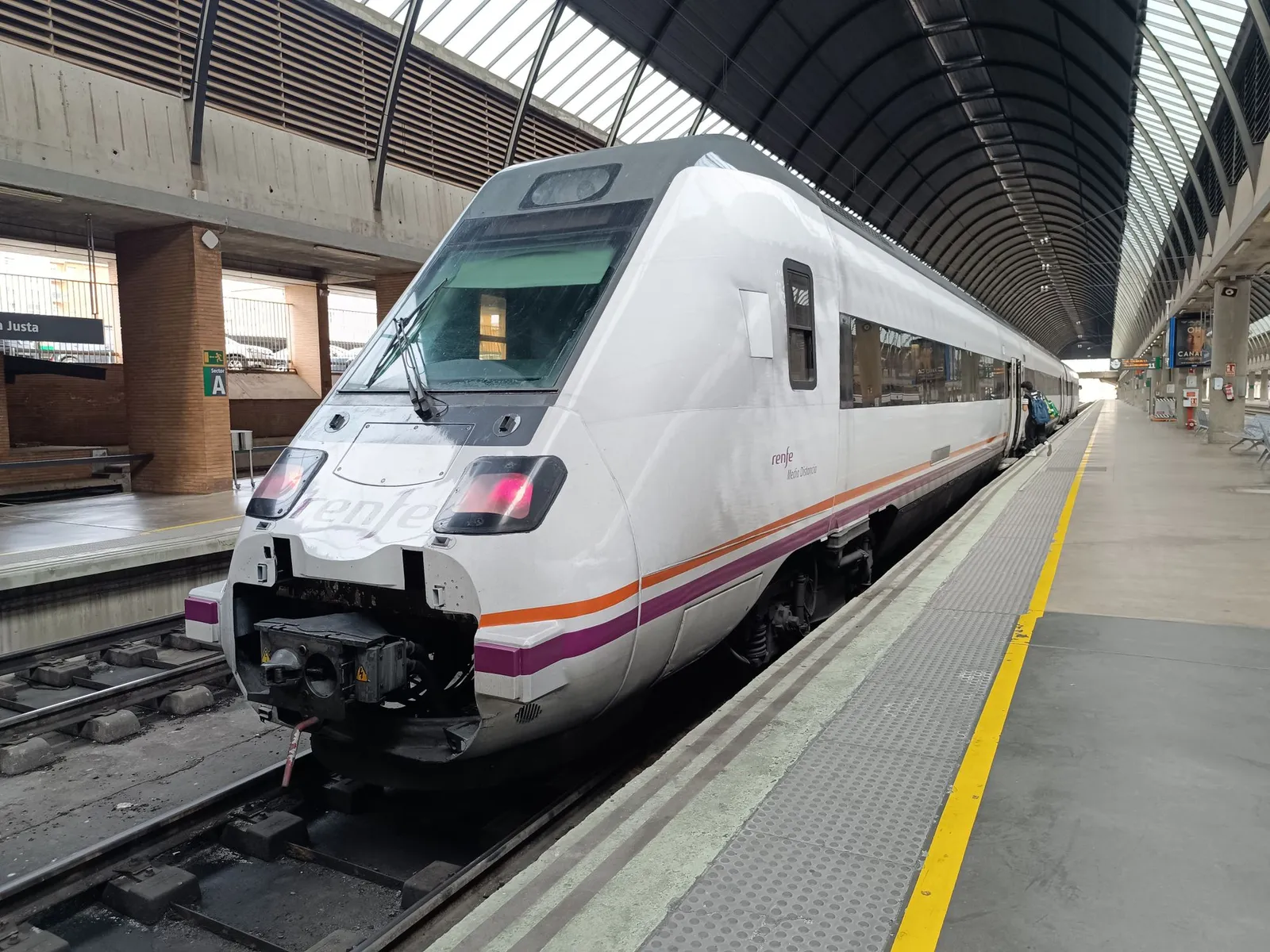
- San Bernardo station and the Viapol stop: about 12-15 minutes on foot. Few visitors know it, and it saves the most time: the C-1 commuter trains to Utrera and the regional trains to Cádiz, Osuna and El Chorro stop here about five minutes after leaving Santa Justa. Next to the station is the Viapol (San Bernardo) stop, the usual Seville terminus of bus M-124 to Carmona.
- Santa Justa train station: about 25-30 minutes on foot. It's the main station.
- Plaza de Armas bus station: about 30 minutes on foot, by the river. The metropolitan buses to Itálica, the Damas buses to Huelva and the ALSA buses to Écija leave from here.
Our tip: for Utrera, Cádiz, Osuna or the Caminito del Rey, board the train at San Bernardo. It's the same train that leaves Santa Justa, and you can walk there in a quarter of an hour.
Summary table: journey times and how to get there
Train times come from Renfe's published timetables and metropolitan bus times from the Seville Transport Consortium, both checked for weekdays in late October 2026. Anything we couldn't confirm on the operator's website is marked as approximate. Always check the timetable for your day before you set off.
| Destination | Transport and departure point | Journey time | There and back in a day? |
|---|---|---|---|
| Itálica and San Isidoro del Campo (Santiponce) | Bus M-170A or M-170B from Plaza de Armas | About 20 min (express) or 30 min | Yes, very easy |
| Utrera | C-1 commuter train or regional train from Santa Justa or San Bernardo | 20-35 min | Yes, very easy |
| Carmona | Bus M-124 (Casal) from Viapol-San Bernardo; some direct services from Prado de San Sebastián | 1 hr – 1 hr 15 min | Yes |
| Écija | ALSA bus from Plaza de Armas | Approx. 1 hr 15 min | Yes |
| Osuna | Regional train from Santa Justa or San Bernardo | 1 hr 15 min – 1 hr 30 min | Yes (about six trains a day) |
| Estepa | Bus from Prado de San Sebastián | Approx. 1 hr 45 min | Tight: few departures |
| Cádiz (La Caleta beach) | Regional train from Santa Justa or San Bernardo | 1 hr 40 min – 2 hr | Yes, plenty of trains |
| Matalascañas and El Rocío | Damas bus from Plaza de Armas | Approx. 1 hr 30 min to El Rocío, 2 hr to Matalascañas | Only with the early departures |
| Caminito del Rey | Regional train to El Chorro from Santa Justa or San Bernardo | About 2 hr 30 min | Yes, on the 7:00 or 8:20 train |
| Minas de Riotinto | Damas bus Seville-Nerva | Not confirmed | Not by bus: car or tour |
| Doñana (inside the National Park) | Bus to El Rocío or Matalascañas plus a guided tour | Approx. 1 hr 30 min – 2 hr | Hard without a car |
Day trips from Seville: all seven, one by one
1. Itálica archaeological site
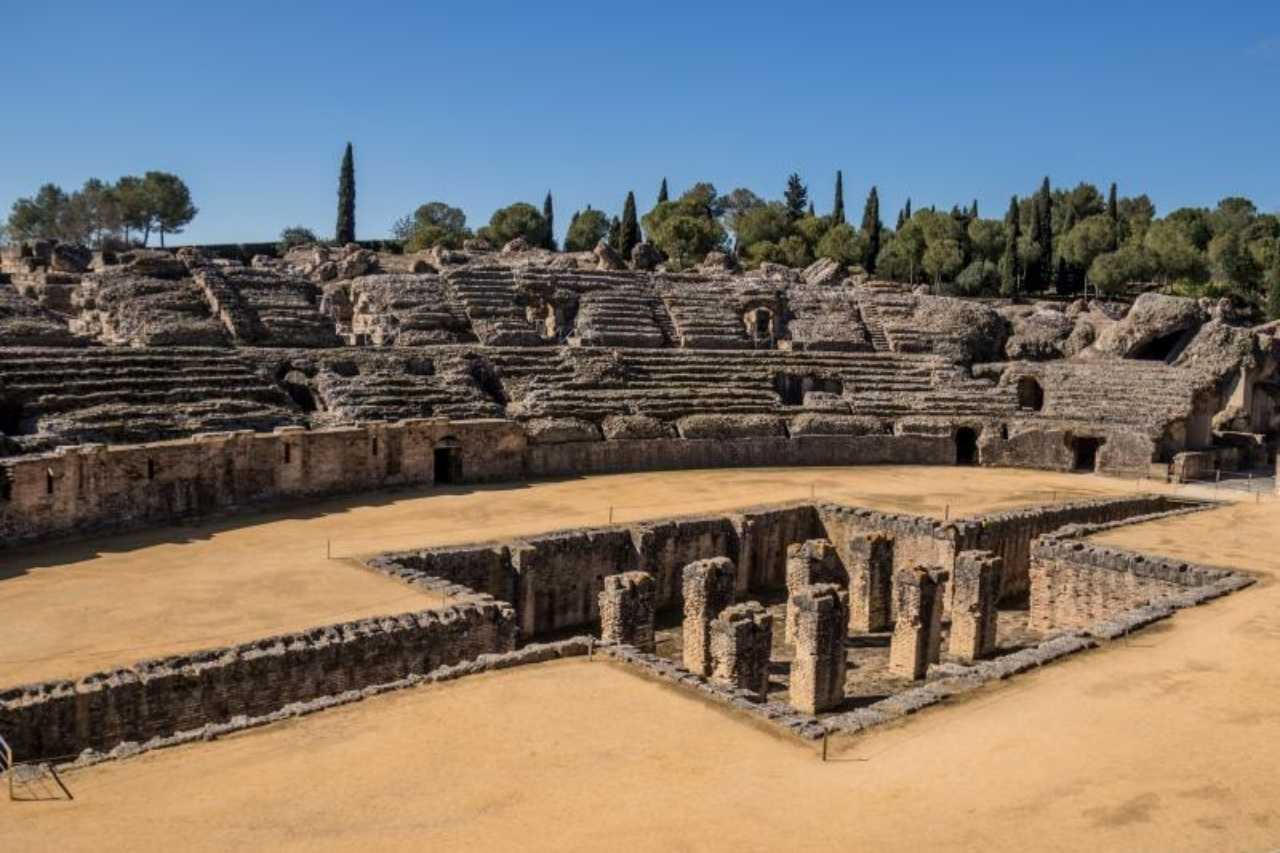
Itálica is the closest day trip and the one we recommend to anyone with half a day free. It's in Santiponce, about 9 km from Seville, and it was the first Roman city founded in Hispania, in 206 BC, by Publius Cornelius Scipio, who settled soldiers wounded at the battle of Ilipa here. The emperor Trajan came from Itálica, and tradition links Hadrian to it as well.
What you'll see is mainly the extension of the city built under Hadrian: wide streets with colonnaded pavements, grand houses with mosaics such as the House of the Birds and the House of the Planetarium, and the amphitheatre, one of the largest in the Empire, with room for around 25,000 spectators.
Official opening hours (as of October 2026, according to the Junta de Andalucía):
- 21 September to 31 March: Tuesday to Saturday 9:00-18:00; Sundays and public holidays 9:00-15:00.
- 1 April to 20 June: Tuesday to Thursday 9:00-18:00; Friday and Saturday 9:00-21:00; Sundays and public holidays 9:00-15:00.
- 21 June to 20 September: Tuesday to Sunday 9:00-15:00.
- Closed on Mondays (unless the next day is a public holiday) and on 1 and 6 January, 1 May and 24, 25 and 31 December. Visitors are asked to start leaving 15 minutes before closing time.
Admission: free for European Union citizens and €1.50 for everyone else. Individual visits don't need booking.
Getting there: Damas metropolitan buses from the Plaza de Armas bus station. The M-170A runs roughly every half hour and takes about 30 minutes to the Itálica stop; on weekdays there are also a few express services that take about 20 minutes. The M-170B, which continues to Las Pajanosas, also stops at Itálica. The stop is on Avenida de Extremadura, right at the entrance. Allow about two hours for the visit.
2. Monastery of San Isidoro del Campo
A short walk from Itálica, in Santiponce itself, is this monastery that hardly anyone visits and that is a real gem. It was founded in 1301 by Alonso Pérez de Guzmán, "Guzmán el Bueno", and María Alonso Coronel as a family pantheon for the house that would later become the Dukes of Medina Sidonia. In 1432 it passed to the Order of Saint Jerome, and it keeps 15th-century wall paintings and a high altarpiece by Martínez Montañés, one of the great sculptors of the Sevillian Baroque.
Opening hours (as of October 2026, according to Santiponce Town Council):
- 16 September to 15 June: Tuesday to Thursday 10:00-15:00; Friday and Saturday 10:00-19:00; Sundays and public holidays 10:00-14:30.
- 16 June to 15 September: Tuesday to Sunday and public holidays 10:00-14:30.
- Closed on Mondays, with no entry in the last 30 minutes. The self-guided visit is free and takes about 45 minutes.
If you do both on the same day, start with Itálica first thing, when it's cooler and quieter, and leave the monastery for late morning.
3. Countryside towns: Carmona, Utrera, Osuna, Écija and Estepa
The Seville countryside, the campiña, has towns with enough heritage to fill a day, good food and a strong flamenco tradition. These are the five we recommend.
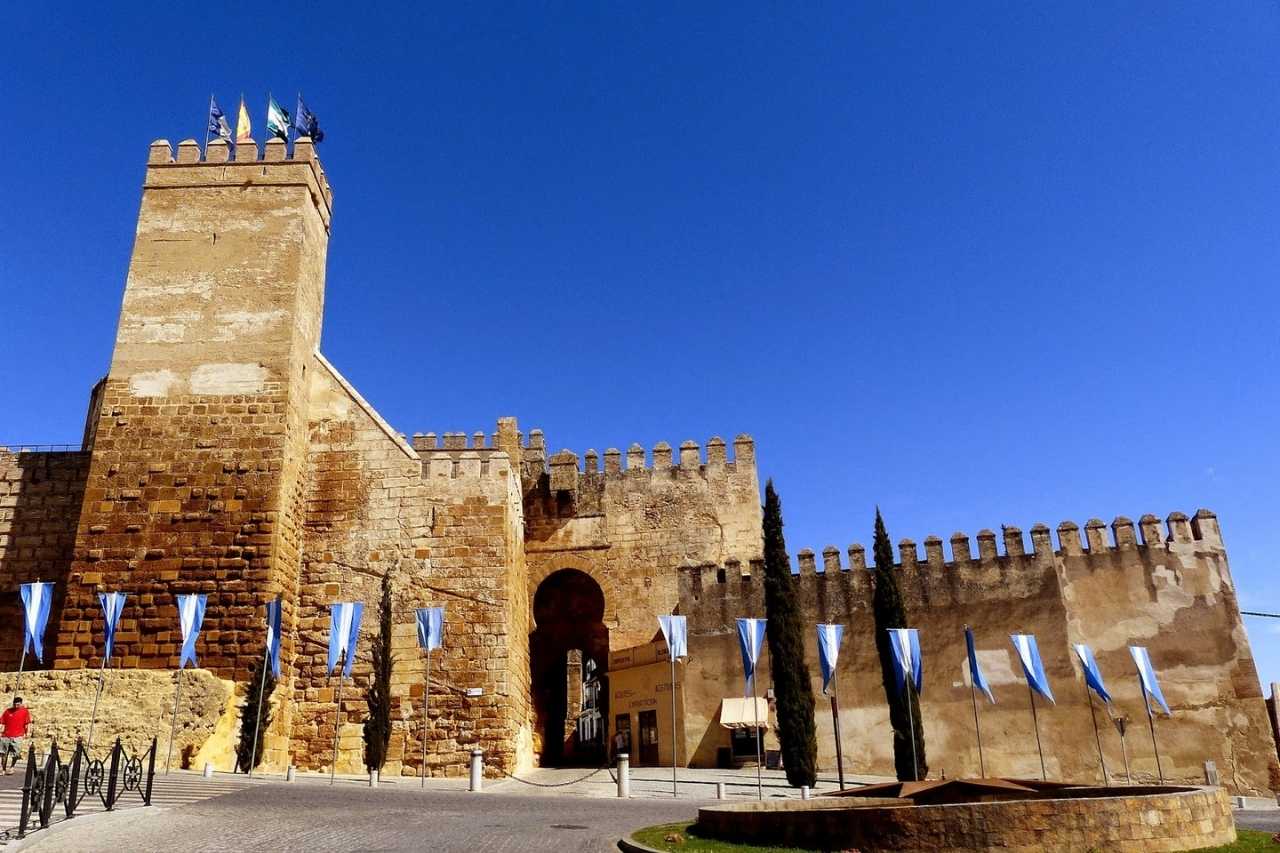
Carmona. Our favourite for a first day out. It sits on a ridge overlooking the plain, and you enter through the Puerta de Sevilla, a fortified gate of Carthaginian and Roman origin. Inside there are Mudéjar churches, convents, the upper Alcázar and, on the edge of town, the Roman necropolis. The bus is the M-124, run by Casal: its Seville terminus is the Viapol (San Bernardo) stop, and the journey to Paseo del Estatuto in Carmona takes around 1 hr 10 min on the regular service, which goes via Parque Alcosa. On weekdays there are also a few direct afternoon departures from the Prado de San Sebastián bus station that take about an hour. Note: the M-124 does not stop at Santa Justa, despite what you may read online.
Utrera. The easiest by train: C-1 commuter trains from Santa Justa or San Bernardo, running roughly every half hour and taking about 30 minutes; the regional trains to Cádiz also stop here and take about 20-25 minutes. It has a castle, a quiet old town and a reputation as a cradle of flamenco.
Osuna. Regional train from Santa Justa or San Bernardo, 1 hr 15 min – 1 hr 30 min, with about six trains a day. It's worth it for the Collegiate Church, the old University and Calle San Pedro with its palatial houses. TV fans will recognise it: its bullring appeared in "Game of Thrones".
Écija. ALSA bus from Plaza de Armas, approx. 1 hr 15 min (we couldn't verify the timetable on ALSA's website, so check it there). It's known as "the city of towers" for its Baroque bell towers, and also as "the frying pan of Andalusia": be sensible in summer.
Estepa. Bus from Prado de San Sebastián, approx. 1 hr 45 min, with few departures a day. It's the capital of mantecados and polvorones, Spain's Christmas crumble biscuits. Check the return bus before you go.
4. Beaches in Cádiz and Huelva
A beach day is very tempting from June to September, but by public transport no beach is less than an hour and a half away, so set off early.
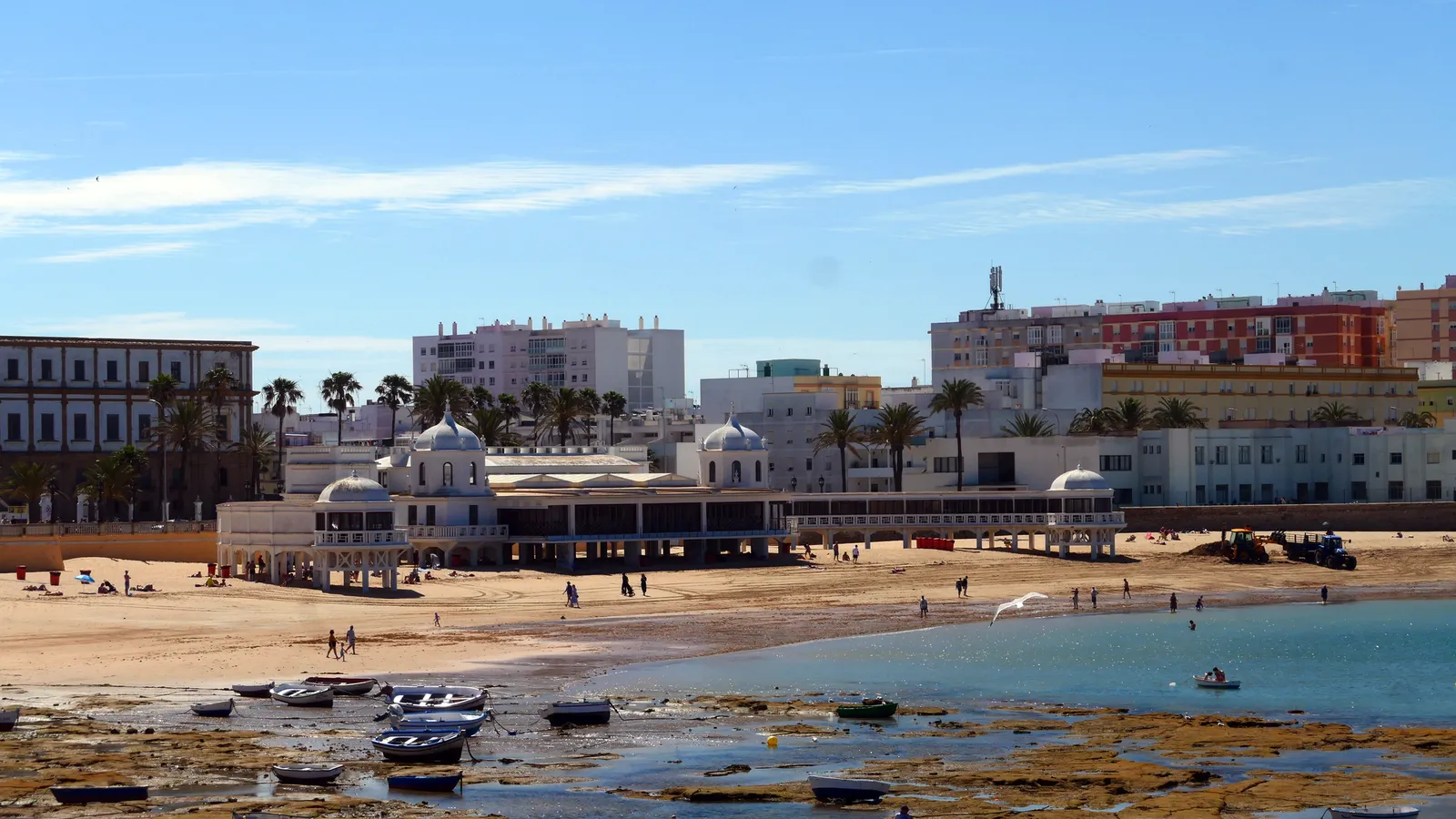
Cádiz and La Caleta. The easiest option and the one we recommend most. Regional trains leave Santa Justa (and stop at San Bernardo) throughout the day, with more than a dozen services, and take between 1 hr 40 min and 2 hr to Cádiz station. From there, a walk of about 25 minutes through the old town brings you to La Caleta beach, between the castles of San Sebastián and Santa Catalina, with the old spa building in the middle. If you prefer a long stretch of sand, La Victoria beach is in Cádiz too. La Barrosa beach, in Chiclana, works better by car.
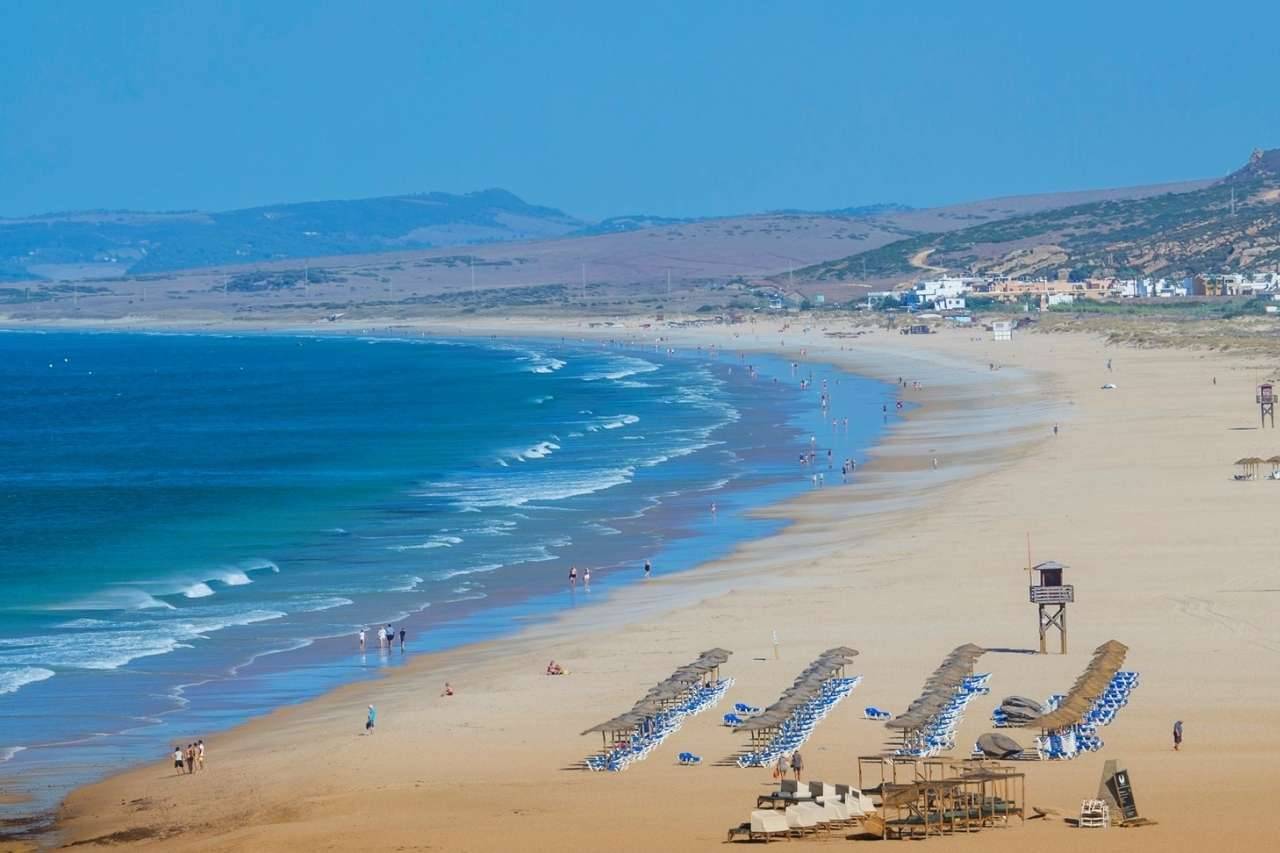
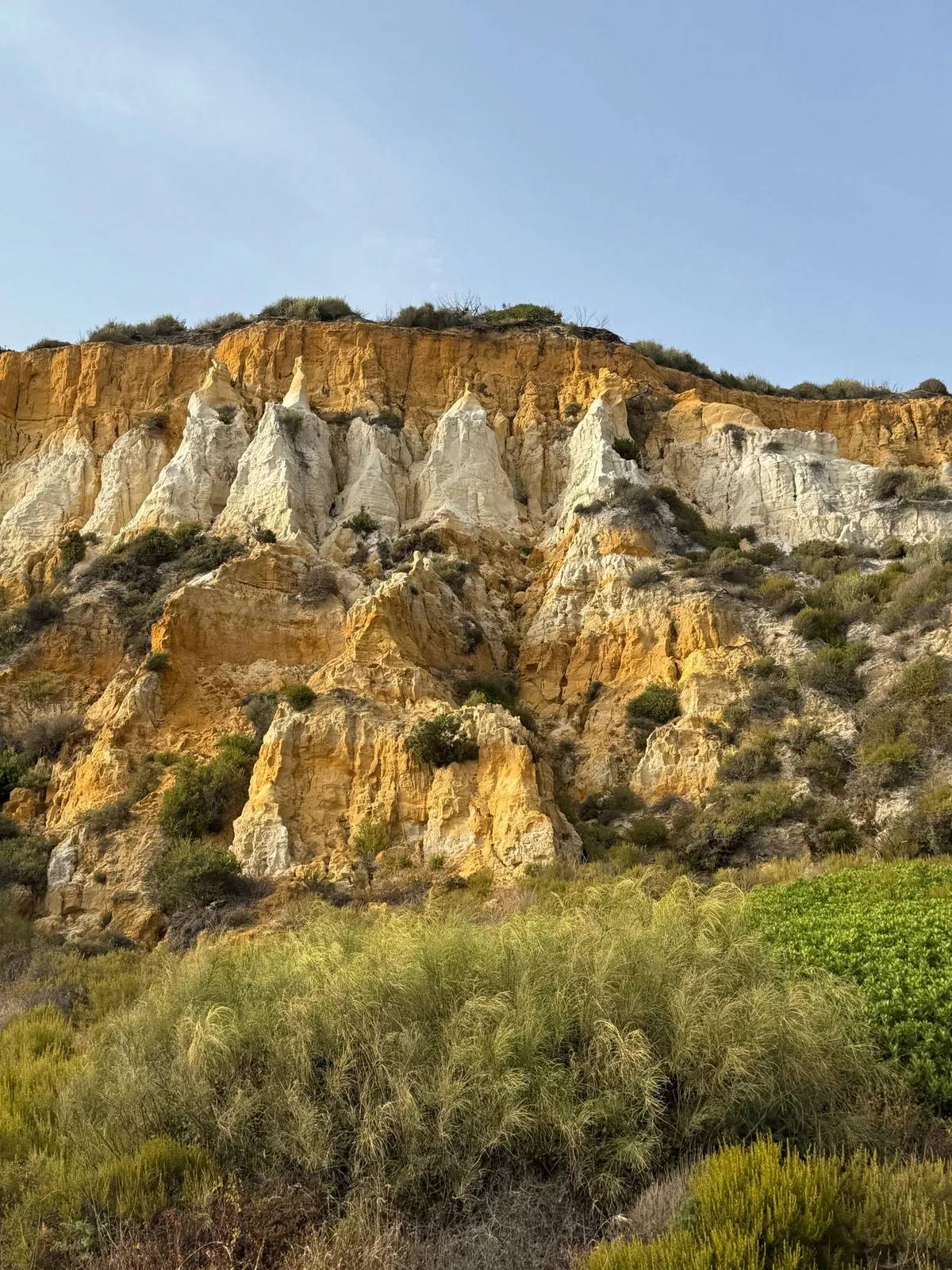
Matalascañas and the Huelva coast. The Damas bus to Matalascañas leaves from Plaza de Armas and takes about 2 hr. It has very few departures: in the 2026-2027 winter timetable published by Damas, the first leaves Seville at 9:30 and the weekday return is in the afternoon. Always confirm on the Damas website, as times change in summer. Matalascañas borders the Doñana natural area and, towards Mazagón, the sandy cliffs of El Asperillo. La Antilla, in Lepe, also has Damas buses from Seville, although the journey is longer.
Zahara, Bolonia and Caños de Meca. The beaches on the wilder stretch of the Cádiz coast are beautiful but far away. Zahara de los Atunes has a Comes bus from Prado de San Sebastián (approx. 3 hr): better with a night there. Bolonia and Caños de Meca have no practical direct connection from Seville: go by car.
5. Caminito del Rey
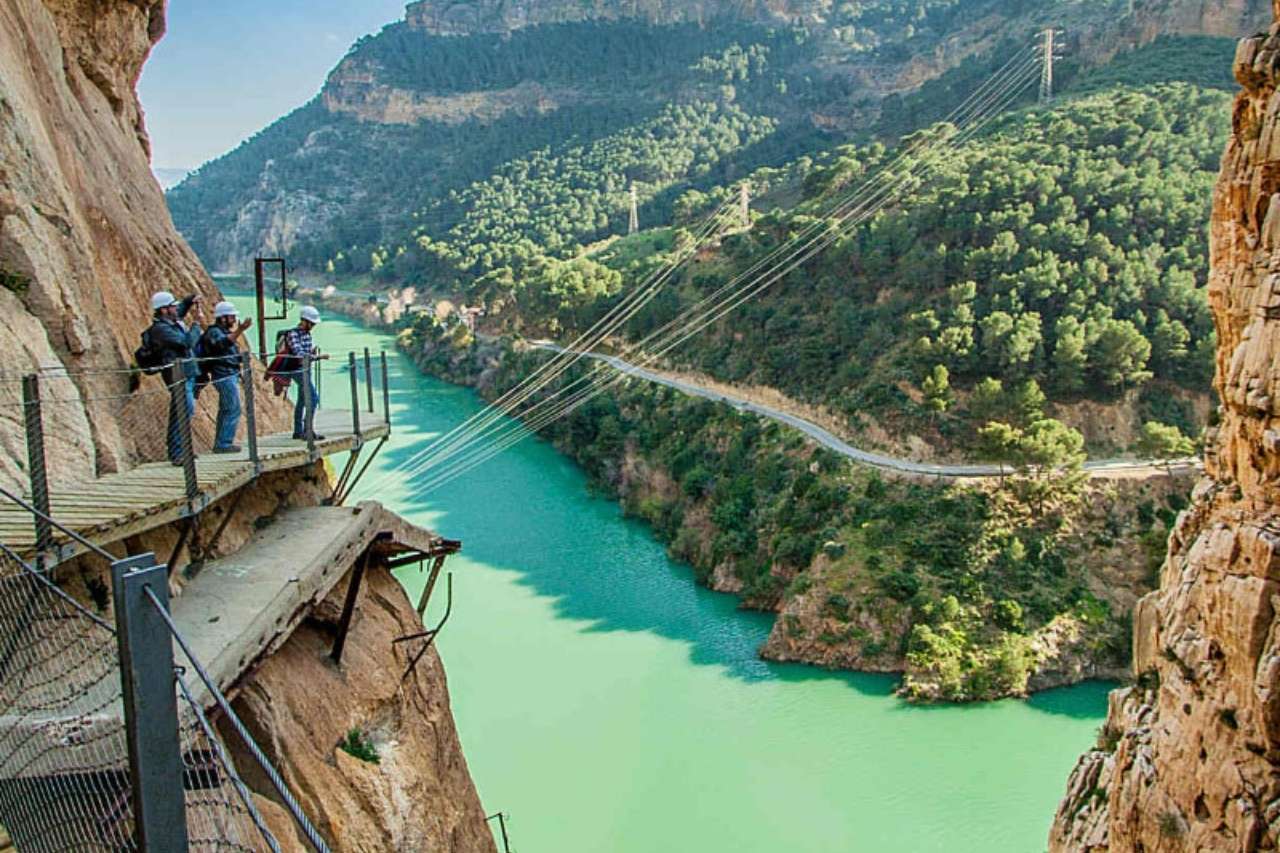
The Caminito del Rey is a walkway fixed to the walls of the Gaitanes gorge, between Ardales and Álora, in the province of Málaga. According to the official website, the full route is 7.7 km including the access paths, linear and one-way (north to south, from the north entrance in Ardales to El Chorro, in Álora), and takes 3-4 hours. Of those, 2.9 km are the boardwalk section, and the suspension bridge hangs 105 m above the river.
Rules you should know (as of October 2026): you must buy your ticket in advance on the official website; the minimum age is 8 and ID is required; you're given a helmet at the entrance checkpoint and hand it back at the end; animals are not allowed; and it opens Tuesday to Sunday, plus a few specific Mondays. The shuttle bus linking the south exit with the north entrance costs €2.50 per person and is not included in the ticket; if you pay the driver, it's cash only.
Getting there from Seville: by regional train to El Chorro-Caminito del Rey station. In Renfe's published timetables for late October 2026, four trains a day leave Santa Justa (at 7:01, 8:20, 10:32 and 18:34; they pass San Bernardo about five minutes later) and take about 2 hr 30 min. To come back there are trains from El Chorro at around 14:20 and 18:00. The combination that works is to take the 7:01 or 8:20 train, book your Caminito slot for mid-morning and return on the 18:00. Buy the train before the entry ticket: the train is what shapes the day.
If you'd rather not depend on the train, a car or an organised tour are the alternatives.
6. Riotinto mines
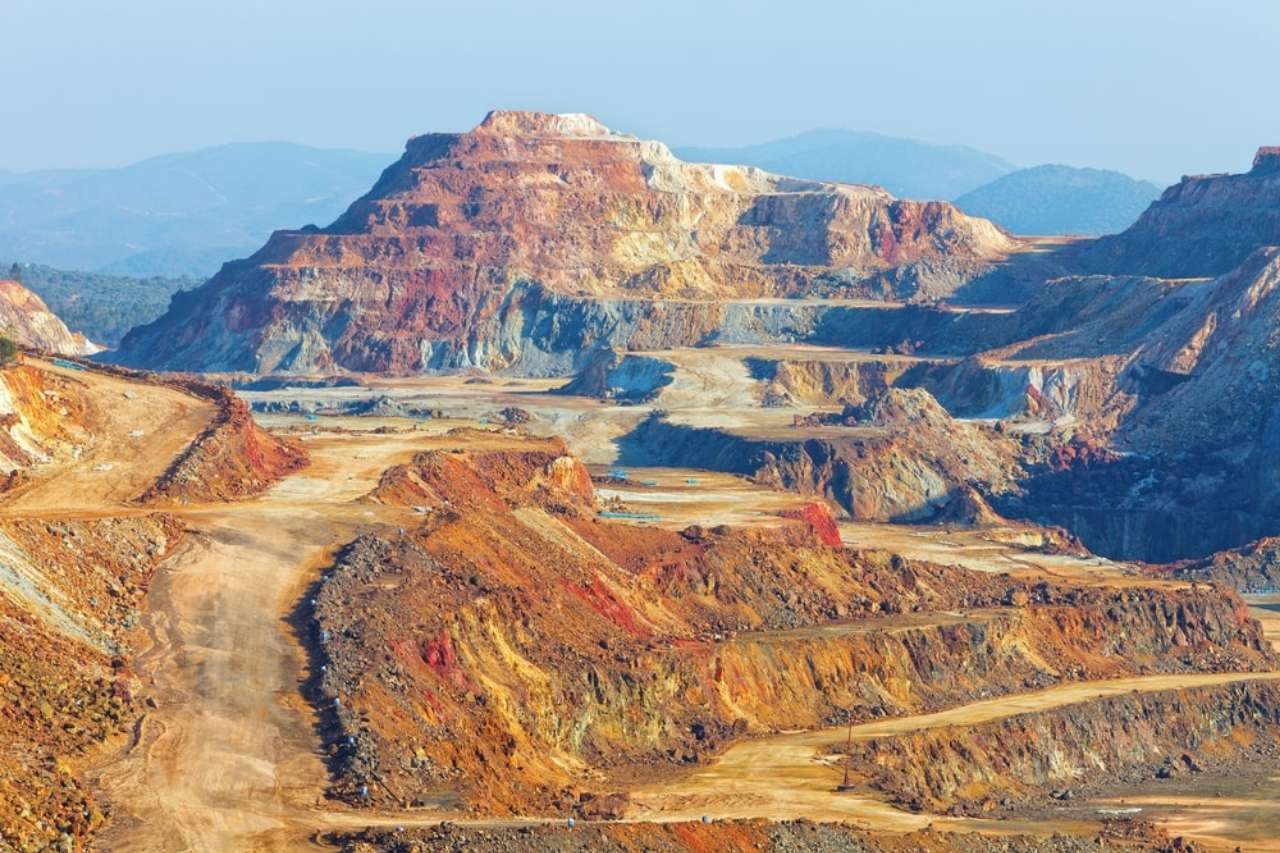
The Riotinto mining area, in northern Huelva, looks like another planet: huge open-pit mines, reddish earth and a river dyed by the metals dissolved in its water. It has been mined since Antiquity, and in the 19th century a British company turned it into one of the world's great copper mines.
The Riotinto Mining Park includes the Mining Museum, House No. 21 in the English quarter of Bellavista, the Peña de Hierro mine and the mining railway, whose line opened in 1875 to link the mines with the port of Huelva. Today the tourist train runs 22 km there and back alongside the Tinto river; the steam locomotive only runs on the first Sunday of each month, from November to April. Places are limited, so book on the park's website.
Getting there: this is where we correct what you often read. The Damas Seville-Nerva line, the one that reaches the area, leaves Seville in the afternoon and returns from Nerva in the morning (2026-2027 winter timetable), so it doesn't work as a day trip. For Riotinto you need a car or an organised tour.
7. Doñana National and Natural Park
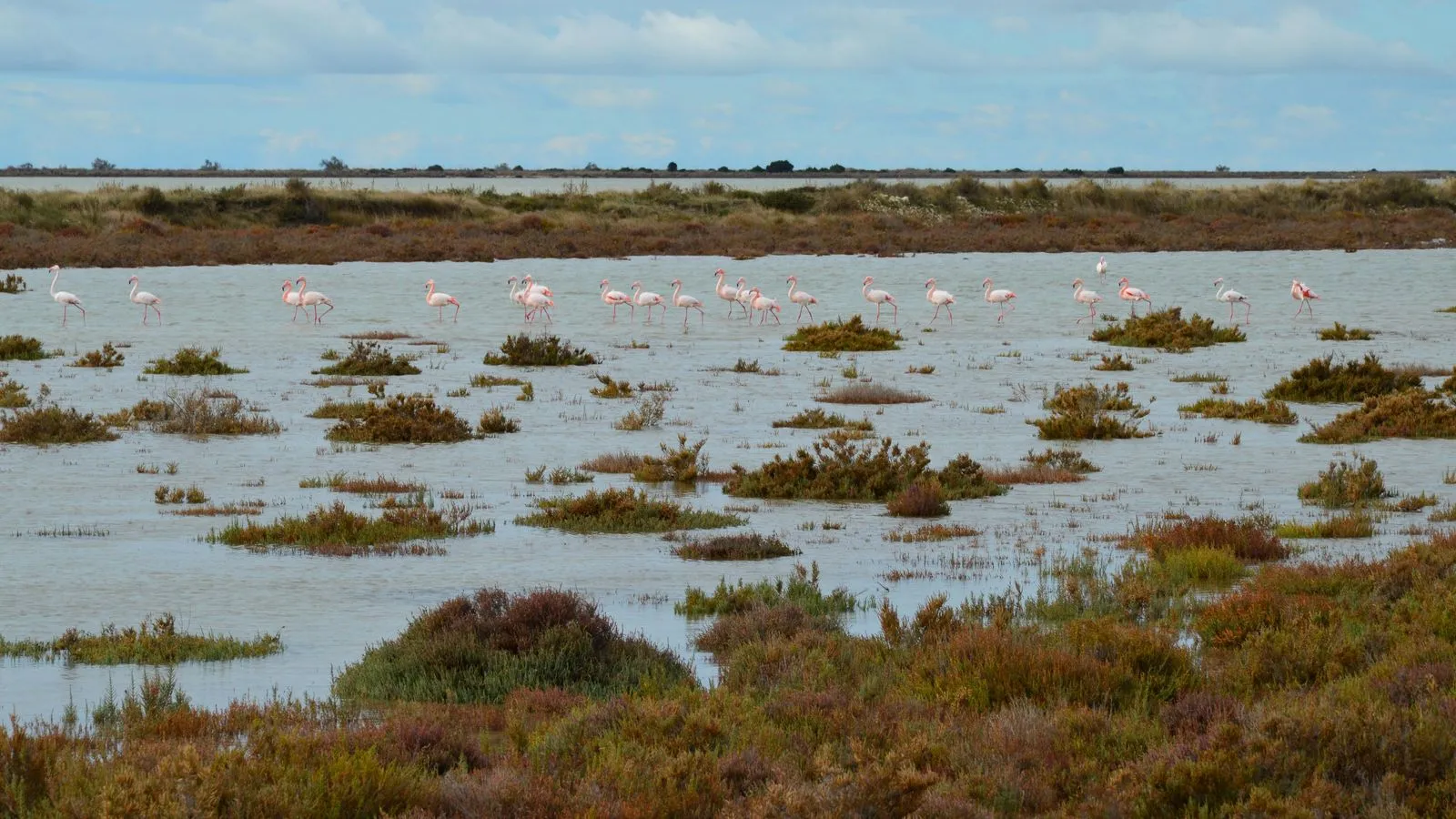
Doñana is one of Europe's most important wetlands. It has been a National Park since 1969 and a UNESCO World Heritage Site since 1994, and its natural area spreads across Huelva, Seville and Cádiz. It protects the Guadalquivir marshes, a stopover, breeding and wintering ground for thousands of birds, as well as moving dunes, pine forests and an unspoilt coastline. Highly endangered species such as the Iberian lynx and the Spanish imperial eagle live here.
How to visit: the interior of the National Park can only be explored on authorised guided tours. The best known are the off-road vehicle routes that leave from the El Acebuche visitor centre, on the A-483 road between El Rocío and Matalascañas; they last around four hours, with morning and afternoon departures. Book in advance and check the times with the company that runs them.
Getting there without a car: the Damas bus to Matalascañas leaves Plaza de Armas and passes through El Rocío (approx. 1 hr 30 min). What we couldn't confirm on the Damas website is whether it stops at El Acebuche, a few kilometres before Matalascañas: ask the operator before you go, or the driver when you board. With so few departures, fitting the bus around a guided tour is tricky, so for Doñana we also recommend a car or an organised tour.
Which trip to choose for the time you have
- Half a day: Itálica and San Isidoro del Campo, or Utrera.
- A full day and you love history: Carmona or Osuna.
- You want the sea: Cádiz by train, with a swim at La Caleta and a stroll through the old town.
- You're after adventure: the Caminito del Rey, on the early train.
- Nature and photography: Doñana or Riotinto, ideally by car or with a tour.
If it's your first time in Seville, don't cut the city short: in three days you can see it properly and still fit in Itálica. Start with our list of the top 10 must-see places in Seville, and if it rains on your trip day, our guide to the best museums in Seville has you covered.
Mistakes we see every week
- Going to Itálica on a Monday. It's closed on Mondays unless the next day is a public holiday, and so is San Isidoro del Campo.
- Looking for the M-124 at Santa Justa. Its Seville stop is Viapol (San Bernardo), or Prado de San Sebastián for the direct services.
- Booking the Caminito before the train. There are only four trains a day; train first, then the entry slot.
- Planning Riotinto by bus. The timetable doesn't let you come back the same day.
- Underestimating the heat. From June to September Itálica only opens in the morning, and the countryside often goes above 40 °C.
Tips from people who live here
- Check the return first. In Estepa, Matalascañas or El Chorro there are few departures a day; look at the last one before deciding.
- Bring some cash. Some metropolitan buses and the Caminito shuttle are paid in cash to the driver.
- Leave early and be back for dinner. Getting back to Seville around eight leaves you the evening for tapas.
- Pack a day bag. Water, a cap, sunscreen and comfortable shoes; for the Caminito, trainers with a good grip. Our guide on what to pack for your trip to Seville has the full list.
- Use the luggage room. If you go on a day trip on the day you leave Seville, at New Samay Hostel you can leave your bags for free and collect them when you get back.
New Samay Hostel, your base for day trips
New Samay Hostel is at Avenida de Menéndez Pelayo 13, next to the Murillo Gardens, where the Santa Cruz quarter begins. For these trips the location really helps: Prado de San Sebastián is five minutes away and San Bernardo station a quarter of an hour on foot. We have private rooms and beds in shared rooms, 24-hour reception and a terrace where, when you get back, there's always someone to compare your day with. You can find out more about us, and if you have questions about a specific trip, get in touch before you arrive.
Frequently asked questions
What is the easiest day trip from Seville without a car?
Itálica and the Monastery of San Isidoro del Campo in Santiponce. Buses M-170A and M-170B leave from Plaza de Armas and take about 20-30 minutes. Utrera, about 30 minutes away on the C-1 commuter train, is the other half-day option.
How do I get from Seville to Carmona by bus?
On line M-124 of the Seville Transport Consortium, run by Casal. In Seville it leaves from the Viapol (San Bernardo) stop, not Santa Justa, and takes around 1 hr 10 min to Paseo del Estatuto. On weekdays there are a few direct afternoon services from Prado de San Sebastián.
Can I get to the Caminito del Rey from Seville by train?
Yes. Regional trains from Santa Justa (they also stop at San Bernardo) reach El Chorro-Caminito del Rey station in about 2 hr 30 min. There are four a day; the practical plan is to go on the 7:01 or 8:20 and return on the 18:00. Buy the train first, then the entry ticket.
How much does Itálica cost and when is it closed?
As of October 2026, entry is free for European Union citizens and €1.50 for everyone else. It closes on Mondays unless the next day is a public holiday, and from 21 June to 20 September it only opens from 9:00 to 15:00.
Which beach is closest to Seville by public transport?
None is less than an hour and a half away. The most practical is Cádiz: regional train from Santa Justa or San Bernardo, 1 hr 40 min to 2 hr, with many trains a day. Matalascañas has a Damas bus from Plaza de Armas, about 2 hr, but with very few departures.
Can I visit Riotinto or Doñana in a day without a car?
It's very difficult. The Damas bus to Nerva leaves Seville in the afternoon and returns in the morning, so it doesn't work for Riotinto. The Matalascañas bus reaches Doñana via El Rocío, but the National Park interior can only be visited on guided tours and the timings rarely fit. For both we recommend a car or an organised tour.
Where can I leave my luggage if I take a day trip on the day I leave Seville?
If you're staying at New Samay Hostel, you can leave it in our free luggage room and pick it up when you get back. The hostel is about 5-7 minutes on foot from Prado de San Sebastián bus station.
Sources
- Junta de Andalucía – Itálica archaeological site: general information
- Santiponce Town Council – Monastery of San Isidoro del Campo
- Seville Metropolitan Transport Consortium – lines M-124 and M-170
- Renfe – commuter and regional train timetables
- Damas – routes and timetables
- Caminito del Rey – Access and route
- Caminito del Rey – How to get there
- Caminito del Rey – FAQ
- Riotinto Mining Park – Mining railway
- MITECO – Doñana National Park
- UNESCO – Doñana National Park
- ALSA
- Transportes Generales Comes
Facts checked in October 2026. Opening times and prices may change: confirm them on the official website before you go.